Busan BGSS Eye Clinic · JCI-Accredited Ophthalmology Since 1997 · 7-Language Patient Care
JCI-Accredited · Since 1997
en-US
Specialty Overview
Pediatric Myopia Control
Pediatric Myopia Control, also known as myopia management, refers to a set of clinical approaches designed to slow the progression of myopia (nearsightedness) in children and adolescents.
Schedule a ConsultationWhat Does Pediatric Myopia Control Mean in Ophthalmology?\n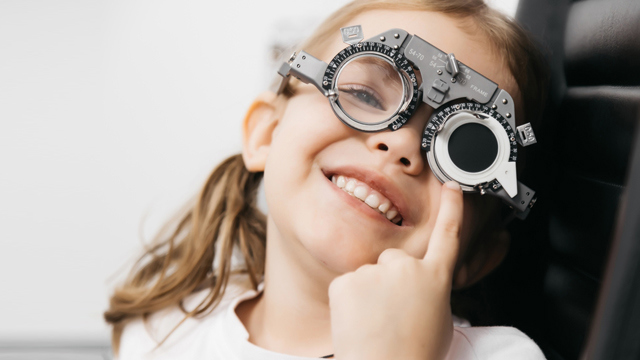 \n\nPediatric Myopia Control, also known as myopia management, refers to a set of clinical approaches designed to slow the progression of myopia (nearsightedness) in children and adolescents, rather than simply correcting it with stronger glasses or contact lenses as it worsens each year. This distinction matters because myopia that develops earlier in childhood tends to progress further by the time a child's eyes finish growing, and higher degrees of myopia are associated with an increased lifetime risk of serious eye conditions, including glaucoma, retinal disease, and cataracts later in life.\n\nMyopia develops through a combination of genetic factors — such as family history and ethnic background — and environmental factors, particularly increased near-distance work like reading, phone use, and screen time, along with reduced time spent outdoors. At Busan BGSS Eye Clinic, Pediatric Myopia Control is offered through three distinct approaches: MiSight 1 Day Contact Lenses, Ortho-K (Dream Lens), and Low-Dose Atropine Therapy, each working through a different mechanism to slow the rate at which a child's myopia worsens over time.\n\n## Advanced Pediatric Myopia Control in Ophthalmology — Precision Care for Busan Families\nParents of children with worsening myopia often feel a quiet sense of alarm watching their child's prescription increase year after year, along with uncertainty about whether anything can be done beyond simply updating glasses each time. Many are unaware that myopia progression itself — not just the inconvenience of needing glasses — carries long-term risks for their child's future eye health, including a higher lifetime risk of retinal complications.\n\nFamilies do not have to simply watch and wait. Our Busan pediatric myopia program is built around identifying which of the three available approaches — MiSight 1 Day Contact Lenses, Ortho-K, or Low-Dose Atropine Therapy — best fits each child's age, lifestyle, and family preferences, with the shared goal of slowing progression during the years when a child's eyes are still developing.\n\n## Pediatric Myopia Control Services & Treatments in Ophthalmology\n
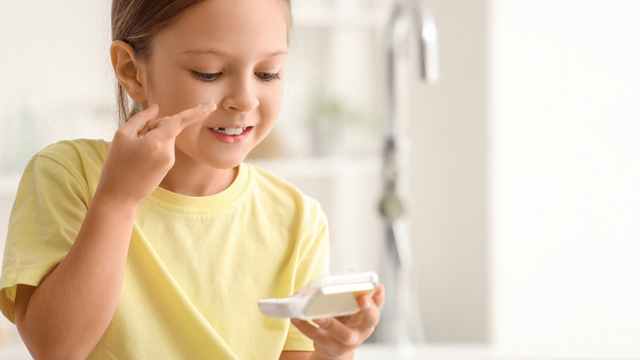 \n\n### MiSight 1 Day Contact Lenses\nA daily disposable contact lens built on a dual-focus optical design, intended to correct vision while simultaneously working to slow myopia progression. Because the lenses are worn during the day and replaced daily, they require relatively straightforward daily care and are generally considered appropriate for children from around age 6 onward, following a fitting and suitability assessment.\n\n### Ortho-K / Dream Lens\nA specialized rigid contact lens worn overnight during sleep, designed to gently and temporarily reshape the cornea by applying gentle, even pressure — flattening the central corneal curvature so that vision is corrected without needing glasses or lenses during waking hours. Because the lenses are worn only overnight, they require more careful cleaning and maintenance than daily disposable options, and are generally considered appropriate for children from around age 6 onward following a fitting assessment.\n\n### Low-Dose Atropine Therapy\nA once-daily eye drop treatment using a low concentration of atropine, intended to slow the rate of myopia progression in children. This approach does not directly correct vision the way a contact lens does, so it may be prescribed on its own or alongside glasses, and typically requires a monthly prescription cycle with regular monitoring. It is generally considered appropriate for children from around age 4 onward.\n\nBusan BGSS Eye Clinic's ability to offer all three approaches — MiSight, Ortho-K, and Low-Dose Atropine Therapy — under one roof allows our team to match each family with the option best suited to their child's age, daily routine, and comfort with lens wear versus drop-based treatment.\n\n## Why Choose Busan BGSS Eye Clinic for Pediatric Myopia Control\n
 \n\n- A full range of evidence-based myopia control options — MiSight, Ortho-K, and Low-Dose Atropine Therapy — allowing families to choose the approach that best fits their child's age and lifestyle\n \n- An ophthalmology team with dedicated academic and clinical experience in pediatric eye care, including an academic appointment specifically focused on pediatric retina at a university children's hospital\n \n- Ongoing myopia progression testing and monitoring throughout the treatment period, since a child's needs may change as their eyes continue developing\n \n- MiSight lenses hold FDA approval specifically for both vision correction and myopia progression control\n \n- Ortho-K lenses hold FDA approval for vision correction, with a long clinical track record in myopia management\n \n- First ophthalmology clinic in Korea to receive Joint Commission International (JCI) accreditation\n \n- Conveniently located at Seomyeon Station in Busan, a key transportation and tourism hub, with in-house multilingual medical interpretation for international families seeking pediatric myopia control in Korea\n \n- Registered medical institution for foreign patients by South Korea's Ministry of Health and Welfare, recognized as an Excellent Medical Tourism Recruitment Institution\n \n\nThis combination of multiple evidence-based options, dedicated pediatric ophthalmology experience, and consistent monitoring is intended to give families confidence that their child's myopia control plan can adapt as their child grows, rather than committing to a single fixed approach regardless of changing needs.\n\n## Meet the Pediatric Myopia Control Specialist at Busan BGSS Eye Clinic\n### Dr. Jong-Ho Park — Director, Busan BGSS Eye Clinic\nHolds a Doctor of Medicine (M.D.) and a Master of Medicine, serving as Associate Professor of Retina at Yangsan Pusan National University Hospital and Associate Professor of Pediatric Retina at Pusan National University Children's Hospital, alongside a role as an Ophthalmic Mentor. His clinical focus spans pediatric retina care, cataract surgery, macular hole surgery, and neuro-ophthalmology.\n\nHis academic appointment dedicated specifically to pediatric retina at a university children's hospital reflects sustained, focused clinical experience examining and treating the eyes of children — a foundation that supports careful evaluation of young patients being considered for myopia control approaches such as MiSight, Ortho-K, or Low-Dose Atropine Therapy, alongside attention to any broader retinal health considerations that may be relevant during a child's evaluation.\n\n## International Patients & Global Support for Pediatric Myopia Control Care\nBusan BGSS Eye Clinic supports international families traveling to Busan, Korea, for pediatric myopia control through structured, in-house coordination designed to reduce the common barriers of language and logistics that often complicate medical travel with children.\n\n- In-house multilingual medical interpretation throughout reception, consultation, myopia progression testing, and lens fitting or prescription counseling\n \n- Coordinated scheduling for diagnostic testing and lens fitting appointments within a condensed visit timeframe where appropriate\n \n- Guidance on continued myopia control management, including prescription renewal information, for families returning to their home country\n \n- Convenient location at Seomyeon Station, allowing families to combine appointments with Busan's shopping and coastal attractions\n \n\nFrom first contact through return home, our multilingual support systems are designed to help international families navigate their child's pediatric myopia control journey clearly, safely, and with minimal added stress.\n\n## Patient Journeys for Pediatric Myopia Control\n### Patient Case 1 — Young Child with Early Myopia Onset\nA child around age 7 recently diagnosed with myopia may be evaluated for MiSight 1 Day Contact Lenses, given the daily disposable format is often easier for younger children and their parents to manage compared to overnight lens care.\n\n### Patient Case 2 — School-Age Child Preferring Daytime Freedom from Lenses or Glasses\nA child who is active in sports or prefers not to wear glasses or contact lenses during the school day may be evaluated for Ortho-K (Dream Lens), which is worn only overnight and allows clear vision during waking hours without daytime lens wear.\n\n### Patient Case 3 — Family Preferring a Non-Lens-Based Option\nA family hesitant about contact lens wear for their child, whether due to the child's age or comfort with lens handling, may be evaluated for Low-Dose Atropine Therapy, a once-daily drop-based approach that does not require lens fitting or removal.\n\n## What to Expect From the Pediatric Myopia Control Process\n
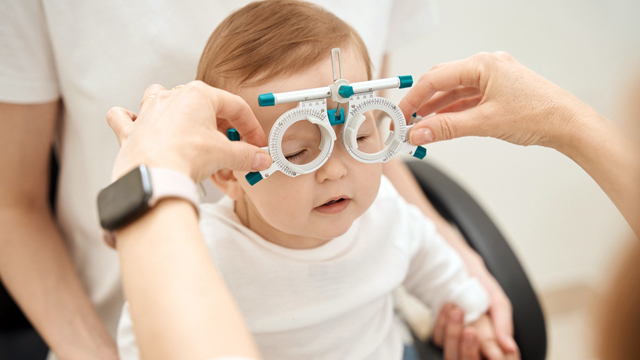 \n\n### Step 1: Initial Consultation & Myopia Progression Testing\nChildren undergo a comprehensive eye examination measuring current refractive error and assessing the rate of myopia progression, forming the basis for determining which control option is most appropriate for their age and needs.\n\n### Step 2: Personalized Treatment Plan\nBased on diagnostic findings and family preference, the treatment team recommends MiSight 1 Day Contact Lenses, Ortho-K (Dream Lens), or Low-Dose Atropine Therapy, taking into account the child's age, lifestyle, and comfort with lens wear versus drop-based treatment.\n\n### Step 3: Ongoing Follow-Up\nBecause myopia typically progresses over several years during childhood and adolescence, children receive scheduled follow-up examinations to monitor progression and adjust the treatment plan as needed, with multilingual coordination available for families traveling from abroad to our Busan clinic.\n\n## Take the Next Step Toward Protecting Your Child's Long-Term Vision\nMyopia progression during childhood carries lasting implications for your child's future eye health. Our pediatric myopia control program at Busan BGSS Eye Clinic offers MiSight, Ortho-K, and Low-Dose Atropine Therapy to help slow progression during these critical developing years.\n\nPrimary CTA: Schedule a Consultation\n\nReach out today to arrange your child's myopia progression testing with our team in Busan and take the first step toward understanding your options for pediatric myopia control.\n\nSecondary contact: Speak with our multilingual patient care team for scheduling and consultation inquiries.
Related Services
Explore our comprehensive range of healthcare offerings tailored to your needs.
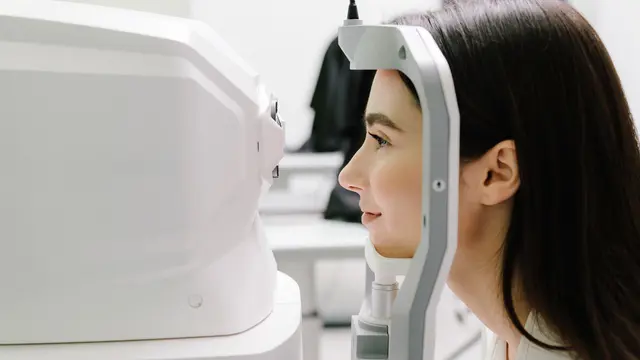
Dry Eye Diagnostic Testing
It is a spectrum of disorders with distinct underlying mechanisms — each requiring a different clinical response.
Learn More

Aqua IPL / Aqua Lifting
Dry eye syndrome is one of the most common and undertreated conditions in ophthalmology — affecting contact lens wearers, digital screen users, post-surgical patients, and adults over 40 with progressively declining tear film quality.
Learn More
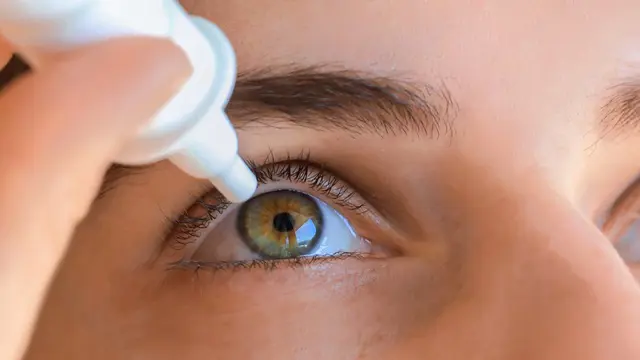
Autologous Serum Eye Drops
Autologous serum eye drops are a specialized therapeutic preparation in which a patient's own blood is processed to extract the serum — which is then formulated as personalized eye drops.
Learn More