Busan BGSS Eye Clinic · JCI-Accredited Ophthalmology Since 1997 · 7-Language Patient Care
JCI-Accredited · Since 1997
en-US

Dry Eye Syndrome Treatment · Needs Clinic Confirmation
Aqua IPL / Aqua Lifting
Dry eye syndrome is one of the most common and undertreated conditions in ophthalmology — affecting contact lens wearers, digital screen users, post-surgical patients, and adults over 40 with progressively declining tear film quality.
Schedule a ConsultationWhat Is Dry Eye Syndrome? Understanding the Causes and Treatment Options in Busan

Dry eye syndrome is one of the most common and undertreated conditions in ophthalmology — affecting contact lens wearers, digital screen users, post-surgical patients, and adults over 40 with progressively declining tear film quality. The condition ranges from mild discomfort and eye fatigue to significant ocular surface damage that affects daily function, work performance, and quality of life. What many patients do not realize is that persistent dry eye unresponsive to standard treatment — eye drops, lifestyle adjustment, rest — may have a specific structural or glandular cause that standard approaches cannot address.
At Busan BGSS Eye Clinic in Seomyeon, Busanjin-gu, dry eye is treated as a clinical condition with identifiable subtypes requiring targeted intervention — not a generic complaint managed with artificial tears alone. The two primary advanced dry eye treatments at the Busanjin-gu, Busan clinic are Aqua IPL, which targets Meibomian Gland Dysfunction through light-based sebum liquefaction, and Aqua Lifting, which addresses conjunctivochalasis — a loosening of the conjunctiva that blocks tear film formation and is a frequently overlooked driver of severe dry eye. Both treatments are supported by international regulatory approvals, and Aqua IPL has been formally registered as a new medical technology by Korea's Ministry of Health and Welfare, with safety and efficacy officially recognized. The BGSS network was designated an Asia-Pacific Education Center for IPL dry eye treatment in 2018 — reflecting the depth of clinical experience the Seomyeon team brings to this specialty.
Who Needs Advanced Dry Eye Treatment in Busan?
Standard dry eye management — lubricating drops, warm compresses, screen breaks — helps many patients but fails those with underlying glandular or structural causes. The dry eye specialist team at Busan BGSS Eye Clinic in Seomyeon evaluates each patient's dry eye type and severity before recommending Aqua IPL, Aqua Lifting, or the iAquaCare comprehensive management program. Patients who benefit from advanced dry eye treatment at the Busanjin-gu, Busan clinic include:
Contact lens wearers experiencing persistent dryness, discomfort, or reduced wearing tolerance despite lubricating drops at the Seomyeon facility
Long-term computer, smartphone, and digital screen users with chronic eye fatigue, grittiness, and reduced blink rate-associated dryness
Adults over 40 with age-related Meibomian gland deterioration causing oily tear layer deficiency and evaporative dry eye at the Busan clinic
Post-eye surgery patients — those who have undergone LASIK, cataract surgery, or presbyopia surgery and are experiencing post-operative dry eye or dryness worsening
Students and working professionals with chronic eye strain and fatigue from sustained near work at the Seomyeon, Busanjin-gu clinic
Patients whose dry eye has not responded to standard treatment — persistent symptoms despite regular eye drop use, warm compresses, and eyelid hygiene suggest an underlying structural or glandular cause treatable with Aqua IPL or Aqua Lifting at the Busanjin-gu, Busan facility
Those with visibly loosened, wrinkled, or yellowed conjunctiva — structural signs of conjunctivochalasis requiring Aqua Lifting at the Seomyeon clinic
Patients with frequent conjunctival redness, edema, or persistent epiphora — excessive tearing paradoxically caused by compromised tear film from conjunctivochalasis
International patients traveling to Busan seeking advanced dry eye treatment unavailable or under-resourced at their home clinic
Meet the Dry Eye Specialists at Busan BGSS Eye Clinic, Seomyeon
|
|
|
Dr. Jeong-Min Woo, M.D. | Dr. Hyun-Uk Shin, M.D. | Dr. Jong-Ho Park, M.D. |



Dr. Jeong-Min Woo, M.D. Director, Busan BGSS Eye Clinic | Visiting Professor, Dong-A University School of Medicine | Clinical Instructor, Dong-A University Hospital Dr. Woo's clinical expertise in corneal disease and ocular adnexal conditions directly informs the dry eye assessment and treatment approach at the Seomyeon, Busanjin-gu clinic. Corneal surface integrity, ocular adnexal anatomy, and tear film stability are interconnected clinical domains — and Dr. Woo's research-grounded practice at the Busanjin-gu, Busan facility brings this integrated understanding to every dry eye case.
Dr. Hyun-Uk Shin, M.D. Director, Busan BGSS Eye Clinic | Visiting Professor, Dong-A University School of Medicine Dr. Shin's expertise in oculoplastics and ocular surface conditions supports the Aqua Lifting and conjunctivochalasis component of the dry eye program at the Seomyeon clinic. The relationship between eyelid anatomy, conjunctival laxity, and chronic dry eye is a clinical area where oculoplastic and ocular surface expertise overlap — making Dr. Shin's combined skill set directly relevant to complex dry eye presentations at the Busan BGSS facility.
Dr. Jong-Ho Park, M.D., Master of Medicine Director, Busan BGSS Eye Clinic | Associate Professor of Retina, Yangsan Pusan National University Hospital Dr. Jong-Ho Park's retina and neuro-ophthalmology expertise supports the Seomyeon clinic's evaluation of dry eye presentations with concurrent posterior segment or systemic neuro-ophthalmic components — ensuring that patients whose dry eye symptoms reflect a broader ocular health picture are assessed comprehensively at the Busanjin-gu, Busan facility.
The three specialists share a consistent dry eye philosophy at the Seomyeon clinic: identify the specific subtype and cause of each patient's dry eye before selecting treatment — because the right intervention for Meibomian Gland Dysfunction is different from the right intervention for conjunctivochalasis, and using artificial tears for both is not a clinical answer.
Dry Eye Treatment Options at Busan BGSS Eye Clinic
Aqua IPL — IPL for Meibomian Gland Dysfunction
Aqua IPL is a light-based treatment for evaporative dry eye caused by Meibomian Gland Dysfunction — a condition in which the oil-secreting glands along the eyelid margin become blocked by hardened sebum, disrupting the oily outer layer of the tear film and accelerating tear evaporation. At the Seomyeon, Busanjin-gu clinic, Aqua IPL delivers 590nm light energy to the periocular skin, converting it to thermal energy that temporarily raises surface temperature, softens the hardened sebum within Meibomian gland blood vessels, and restores normal oil secretion — directly addressing the evaporative dry eye mechanism.
Beyond Meibomian gland restoration, Aqua IPL at the Busanjin-gu, Busan facility also shrinks abnormally dilated periocular blood vessels, removes inflammatory mediators from the ocular surface, and eliminates bacteria and Demodex mite infestations that contribute to chronic eyelid margin inflammation and dry eye recurrence. This multi-mechanism action explains the 89% dry eye improvement rate documented in the BGSS network's clinical data. The procedure is short, requires no recovery time, and patients return to normal activities immediately after treatment at the Seomyeon clinic. Additional benefits include improvement of periocular skin concerns including rosacea and blemishes.
Aqua IPL is FDA-approved and in active use at more than 20 countries' recognized medical institutions including Mayo Clinic. In Korea, it has been formally registered as a new medical technology — "IPL Treatment for Dry Eye Syndrome" — by the Ministry of Health and Welfare, with safety and efficacy officially confirmed. The BGSS network was designated an Asia-Pacific Education Center for IPL dry eye treatment in 2018.
iAquaCare Comprehensive Dry Eye Management Program
The iAquaCare program at the Busanjin-gu, Busan clinic combines thermal eyelid massage, eyelid hygiene and debris removal, moisture and hydration care, and acupressure into a comprehensive ocular surface restoration protocol. The program relaxes periocular muscles, improves eyelid margin health, restores surface moisture, and enhances periocular blood circulation — providing a supportive care framework alongside Aqua IPL or as a standalone management approach for milder dry eye presentations at the Seomyeon, Busanjin-gu clinic.
Aqua Lifting — Radiofrequency Laser for Conjunctivochalasis
Conjunctivochalasis — loosening and wrinkling of the conjunctiva covering the white of the eye — is a frequently overlooked cause of severe, treatment-resistant dry eye. The loosened conjunctiva physically disrupts tear film formation and blocks the tear drainage pathway, causing persistent dryness and paradoxical epiphora (excessive tearing) that standard dry eye treatments cannot resolve. Causes include aging, long-term contact lens wear, trichiasis, conjunctival inflammation, eyelid surgery, and trauma.
Aqua Lifting at the Seomyeon clinic uses the OcuRF radiofrequency device to deliver precisely controlled low-energy radiofrequency (under 1 watt) to the loosened conjunctival tissue, thermally contracting and tightening it without incision, sutures, or scarring. The entire procedure takes approximately 5 minutes at the Busanjin-gu, Busan facility, uses a disposable single-use tip to prevent infection, and requires no downtime — patients return to daily activities immediately. Aqua Lifting holds regulatory approval from the US FDA, European CE MDD, Japanese PMDA, and Korean MFDS — the broadest international regulatory validation available for any conjunctivochalasis treatment device.
Aqua Lifting at the Seomyeon, Busanjin-gu clinic also addresses conjunctival edema, trichiasis, and conjunctival nevus in addition to conjunctivochalasis-driven dry eye.
Dry Eye Treatment Process and Timeline at Busan BGSS Eye Clinic

Specialist Consultation and Dry Eye Grading — The specialist team at the Seomyeon, Busanjin-gu clinic assesses ocular surface condition, tear film quality, Meibomian gland status, and conjunctival anatomy to grade dry eye severity and identify the primary cause — Meibomian Gland Dysfunction, conjunctivochalasis, or a combination — before recommending Aqua IPL, Aqua Lifting, iAquaCare, or a combination protocol at the Busan facility.
iAquaCare Preparation — For patients undergoing Aqua IPL, the iAquaCare thermal massage and eyelid care program prepares the ocular surface — loosening eyelid debris, improving meibum consistency, and optimizing the Meibomian gland environment for IPL response at the Seomyeon clinic.
Aqua IPL Treatment Session — The IPL device delivers 590nm light pulses to the periocular skin at the Busanjin-gu, Busan clinic. The procedure is brief, well-tolerated, and requires no anaesthetic. Multiple sessions at intervals may be recommended depending on dry eye severity and clinical response.
Aqua Lifting Treatment (where indicated) — For patients with confirmed conjunctivochalasis at the Seomyeon facility, OcuRF radiofrequency is delivered to the loosened conjunctival tissue in a 5-minute non-incision procedure. A disposable tip is used for each patient. No sutures, no scarring, and immediate return to daily activities at the Busanjin-gu, Busan clinic.
Post-Treatment Assessment — The specialist team reviews ocular surface response, tear film improvement, and symptom change at follow-up appointments at the Seomyeon, Busanjin-gu clinic. Treatment frequency and continuation are adjusted based on individual response.
Ongoing Dry Eye Management — The BGSS dry eye program at the Busan facility provides individualized long-term management combining periodic Aqua IPL maintenance, iAquaCare sessions, and continued specialist monitoring to maintain ocular surface health and prevent recurrence.
Dry Eye Treatment Results, Safety, and Longevity
Aqua IPL at Busan BGSS Eye Clinic achieves an 89% dry eye improvement rate in the BGSS network's clinical data — a figure reflecting the treatment's multi-mechanism action on Meibomian gland function, periocular vasculature, and ocular surface inflammation. Aqua Lifting's radiofrequency contraction of loosened conjunctival tissue provides structural resolution of conjunctivochalasis-driven dry eye that no topical treatment can replicate. Individual results vary based on dry eye subtype, severity, and duration, and no specific outcome is guaranteed. Temporary side effects of IPL include mild redness and transient pigmentation changes; Aqua Lifting carries minimal side effect risk given its non-incision, low-energy delivery method.
Both Aqua IPL and Aqua Lifting are internationally regulatory-approved — FDA, CE, PMDA, and Korean MFDS for Aqua Lifting; FDA approval and Korean New Medical Technology registration for Aqua IPL — confirming their safety profiles at the standard required for clinical use at the Seomyeon, Busanjin-gu clinic. Treatment effects from Aqua IPL typically require multiple sessions for optimal response and may need periodic maintenance given the progressive nature of Meibomian gland aging. Aqua Lifting's structural correction of conjunctivochalasis provides more durable improvement as the conjunctival tissue is physically tightened rather than managed symptomatically.
Why Choose Busan BGSS Eye Clinic in Seomyeon for Dry Eye Treatment?
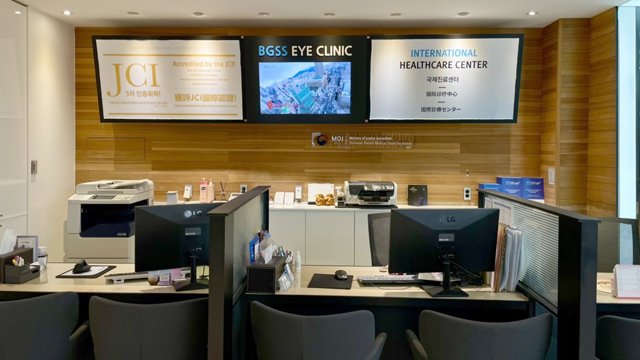
Dry eye treatment at Busan BGSS Eye Clinic in Seomyeon, Busanjin-gu is grounded in clinical subspecialty depth that most general eye clinics cannot match: a specialist team covering corneal disease, ocular surface, oculoplastics, and conjunctival conditions; the full Aqua IPL and Aqua Lifting treatment portfolio; the iAquaCare comprehensive management program; and the BGSS network's 2018 Asia-Pacific Education Center designation for IPL dry eye treatment. As the founding BGSS location since 1997 with 330,000+ procedures performed, the Seomyeon clinic's credentials are clear:
First ophthalmology clinic in Korea to receive JCI accreditation — four cycles
Asia-Pacific Education Center for IPL Dry Eye Treatment (2018)
Aqua IPL registered as New Medical Technology — Korean Ministry of Health and Welfare
Aqua Lifting: FDA, CE MDD, PMDA, and Korean MFDS approved — broadest international regulatory validation
89% dry eye improvement rate — BGSS network clinical data
Key Medical Tourism Cooperative Institution, City of Busan — multilingual support in Chinese, English, Japanese, Mongolian, Russian, Vietnamese, and Indonesian
Patient Experiences: Dry Eye Treatment at Busan BGSS Eye Clinic, Seomyeon
Patient Vignette 1 — Post-LASIK Dry Eye, Early 30s
A patient in their early 30s at the Busanjin-gu, Busan clinic had experienced persistent dry eye following LASIK surgery at another clinic two years earlier. Standard lubricating drops provided only temporary relief. Following dry eye grading at the Seomyeon, Busanjin-gu clinic, Meibomian Gland Dysfunction was confirmed and a course of Aqua IPL treatment was initiated. The patient reported progressive improvement in ocular surface comfort and reduced reliance on lubricating drops over the treatment course. Results vary; no outcome is guaranteed.
Patient Vignette 2 — Conjunctivochalasis, Late 50s
A patient in their late 50s traveling to Busan had been using dry eye drops for several years with no sustained improvement and also reported paradoxical excessive tearing. Slit lamp examination at the Seomyeon clinic identified visible conjunctival laxity consistent with conjunctivochalasis. Aqua Lifting was performed using the OcuRF device in a single 5-minute session at the Busanjin-gu, Busan facility. Dry eye symptoms and tearing both improved at the follow-up review. Individual results vary and no specific outcome is guaranteed.
Relieve Your Dry Eyes — Book Your Aqua IPL or Aqua Lifting Consultation in Busan
If persistent dry eye, digital eye strain, post-surgical dryness, or chronic eye discomfort is affecting your daily life — and standard treatments have not provided lasting relief — the specialist dry eye team at Busan BGSS Eye Clinic in Seomyeon, Busanjin-gu is ready to identify the cause and match you to the right treatment. Aqua IPL, Aqua Lifting, and the iAquaCare comprehensive program offer clinically validated, internationally approved solutions for the full spectrum of dry eye subtypes. JCI accredited. FDA and CE approved. New Medical Technology registered. Multilingual support in Chinese, English, Japanese, Mongolian, Russian, Vietnamese, and Indonesian.
**[Book Your Dry Eye Consultation at Busan BGSS Eye Clinic](/contact-us)
Other Services
Explore our comprehensive range of healthcare offerings tailored to your needs.
Dry Eye Diagnostic Testing
It is a spectrum of disorders with distinct underlying mechanisms — each requiring a different clinical response.
Learn More

Aqua IPL / Aqua Lifting
Dry eye syndrome is one of the most common and undertreated conditions in ophthalmology — affecting contact lens wearers, digital screen users, post-surgical patients, and adults over 40 with progressively declining tear film quality.
Learn More
Autologous Serum Eye Drops
Autologous serum eye drops are a specialized therapeutic preparation in which a patient's own blood is processed to extract the serum — which is then formulated as personalized eye drops.
Learn More