Busan BGSS Eye Clinic · JCI-Accredited Ophthalmology Since 1997 · 7-Language Patient Care
JCI-Accredited · Since 1997
en-US

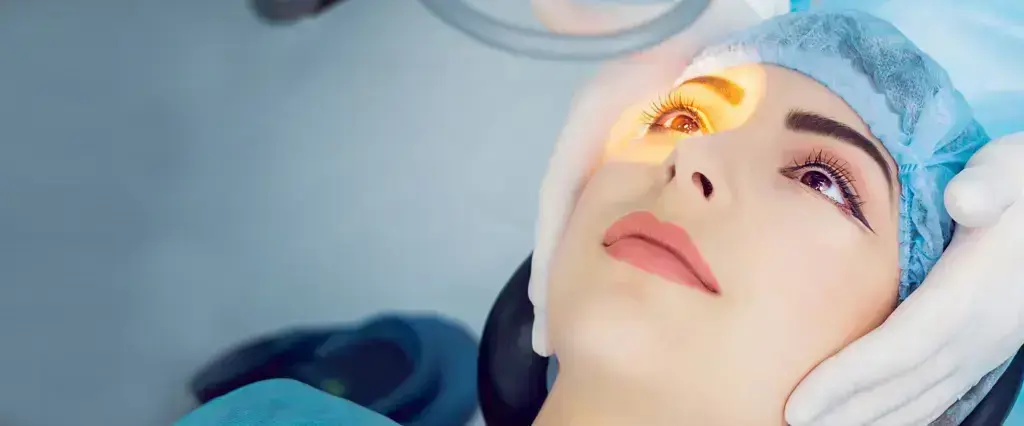
Specialty Overview
Cataract Surgery
Cataract Surgery involves removing the clouded natural lens and replacing it with an artificial intraocular lens (IOL).
Schedule a ConsultationWhat Does Cataract Surgery Mean in Ophthalmology?\n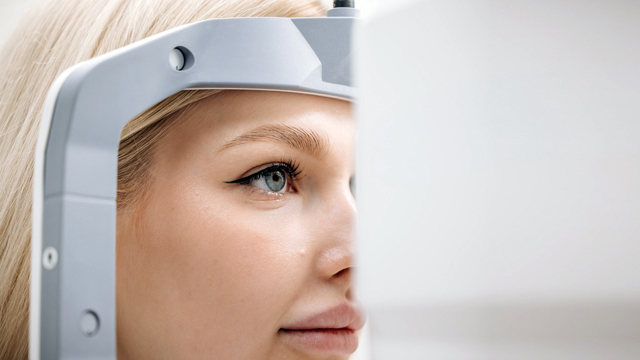 \n\nA cataract develops when the eye's natural lens — normally clear — gradually becomes clouded, most commonly as a result of aging. This clouding scatters and blocks light from properly reaching the retina, causing vision to appear increasingly hazy, dim, or washed out, even with updated glasses or contact lens prescriptions. Unlike presbyopia, which involves a loss of the lens's focusing flexibility while the lens itself remains clear, a cataract is a structural change in the lens tissue itself, and its progression is generally addressed through surgical removal and replacement of the clouded lens rather than through corrective lenses alone.\n\nCataract Surgery involves removing the clouded natural lens and replacing it with an artificial intraocular lens (IOL). At Busan BGSS Eye Clinic, this is performed through Laser Multifocal Cataract Surgery, an approach that uses femtosecond laser technology alongside a multifocal intraocular lens designed to address vision across multiple focal distances — near, intermediate, and far — in a single procedure. Prior to any cataract procedure, patients undergo a Comprehensive Eye Exam, a detailed diagnostic evaluation used to assess the degree of lens clouding, overall eye health, and suitability for multifocal lens correction.\n\n## Advanced Cataract Surgery in Ophthalmology — Precision Care for Busan Patients\nPatients living with cataracts often describe their vision as though looking through a fogged or frosted window — colors appear duller, night driving becomes more difficult due to glare, and daily tasks that once felt effortless, like reading or recognizing faces, become increasingly frustrating. Many patients are also unsure whether cataract surgery will only restore basic vision or whether it might also reduce their dependence on glasses altogether.\n\nPatients do not have to face this uncertainty alone. Our Busan cataract surgery team begins with a thorough Comprehensive Eye Exam to understand each patient's specific lens condition, retinal health, and visual goals, so that the recommended surgical approach — including whether a multifocal lens is appropriate — is tailored to the individual rather than applied as a one-size-fits-all solution.\n\n## Cataract Surgery Services & Treatments in Ophthalmology\n
 \n\n### Laser Multifocal Cataract Surgery\nA surgical procedure that combines femtosecond laser technology with a multifocal intraocular lens to remove the clouded natural lens and replace it with a lens designed to provide functional vision across near, intermediate, and distance ranges. This approach may be considered for patients seeking to address both cataract-related vision loss and a broader range of focusing needs within a single cataract surgery procedure, depending on individual eye health and candidacy.\n\n### Comprehensive Eye Exam\nA detailed diagnostic evaluation assessing the degree of lens clouding, corneal health, retinal condition, and overall ocular health prior to cataract surgery. This exam forms the foundation for determining cataract severity, ruling out other contributing eye conditions, and establishing whether a patient is a suitable candidate for Laser Multifocal Cataract Surgery specifically, as opposed to standard single-focus lens replacement.\n\nBusan BGSS Eye Clinic's approach of pairing a Comprehensive Eye Exam with Laser Multifocal Cataract Surgery under one roof allows our team to make an individualized recommendation grounded in a complete picture of each patient's eye health, rather than treating the cataract in isolation from broader visual and retinal considerations.\n\n## Why Choose Busan BGSS Eye Clinic for Cataract Surgery\n
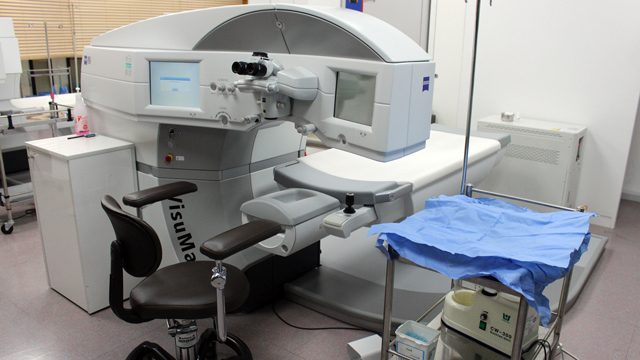 \n\n- An ophthalmology team with combined clinical focus explicitly naming cataract surgery, alongside corneal health, retinal care, and refractive surgery — supporting a well-rounded evaluation of each cataract patient's overall eye health\n \n- Published research on long-term patient satisfaction following cataract surgery, along with documented outcomes for cataract surgery performed on patients with monocular vision\n \n- Clinical experience extending to pediatric retina and macular hole surgery, giving the team additional depth when cataract patients present with coexisting retinal considerations\n \n- First ophthalmology clinic in Korea to receive Joint Commission International (JCI) accreditation\n \n- Surgical systems operated in compliance with FDA safety standards\n \n- Conveniently located at Seomyeon Station in Busan, a key transportation and tourism hub, with in-house multilingual medical interpretation for international patients seeking cataract surgery in Korea\n \n- Registered medical institution for foreign patients by South Korea's Ministry of Health and Welfare, recognized as an Excellent Medical Tourism Recruitment Institution\n \n\nThis combination of dedicated cataract research, corneal expertise, and retinal care experience is intended to give both local and international patients confidence that their Laser Multifocal Cataract Surgery plan accounts for their complete visual profile, not only the cataract itself.\n\n## Meet the Cataract Surgery Specialists at Busan BGSS Eye Clinic\n<table style="min-width: 200px;"><col style="min-width: 50px;"><col style="min-width: 50px;"><col style="min-width: 50px;"><col style="min-width: 50px;"><td colspan="1" rowspan="1" style="padding: 0px;"><p style="text-align: start;"><img src="https://synolinkcms.blob.core.windows.net/saas-01a1e895-544e-760f-94b7-cf38336826b4/images/dr-gil-ho-park-76e69186-acde-4f82-baee-2a2d2f304a13-5835c5bb.jpg\" alt="Dr. Gil-Ho Park, cataract specialist and director at Busan BGSS Eye Clinic." title="" width="290" height="290">
<td colspan="1" rowspan="1" style="padding: 0px;"><p style="text-align: start;"><img src="https://synolinkcms.blob.core.windows.net/saas-01a1e895-544e-760f-94b7-cf38336826b4/images/dr-jeong-min-woo-032ae48b-94df-49af-8050-eab165a479bc-61031830.jpg\" alt="Dr. Jeong-Min Woo, cataract and refractive specialist at Busan BGSS Eye Clinic." title="" width="290" height="290"><td colspan="1" rowspan="1" style="padding: 0px;"><p style="text-align: start;"><img src="https://synolinkcms.blob.core.windows.net/saas-01a1e895-544e-760f-94b7-cf38336826b4/images/dr-byung-uk-ko-43198136-c2f7-4553-adc4-451c598bfd63-0d11e3ae.jpg\" alt="Dr. Byung-Uk Ko, cornea and cataract surgery director at Busan BGSS Eye Clinic." title="" width="290" height="290"><td colspan="1" rowspan="1" style="padding: 0px;"><p style="text-align: start;"><img src="https://synolinkcms.blob.core.windows.net/saas-01a1e895-544e-760f-94b7-cf38336826b4/images/dr-jong-ho-park-086d33fe-df71-4eb8-b146-c27a844aa79a-ee000d8e.jpg\" alt="Dr. Jong-Ho Park, cataract and retina specialist at Busan BGSS Eye Clinic." title="" width="290" height="290"><td colspan="1" rowspan="1" style="padding: 0px;"><p style="text-align: center;"><span style="color: rgb(77, 152, 216);">Dr. Gil-Ho Park, M.D., Ph.D.


<span style="color: rgb(77, 152, 216);">Ophthalmologist<td colspan="1" rowspan="1" style="padding: 0px;"><p style="text-align: center;"><span style="color: rgb(77, 152, 216);">Dr. Jeong-Min Woo, M.D.
<span style="color: rgb(77, 152, 216);">Ophthalmologist<td colspan="1" rowspan="1" style="padding: 0px;"><p style="text-align: center;"><span style="color: rgb(77, 152, 216);">Dr. Byung-Uk Ko, M.D.
<span style="color: rgb(77, 152, 216);">Ophthalmologist<td colspan="1" rowspan="1" style="padding: 0px;"><p style="text-align: center;"><span style="color: rgb(77, 152, 216);">Dr. Jong-Ho Park, M.D.
<span style="color: rgb(77, 152, 216);">Ophthalmologist\n\n### Dr. Gil-Ho Park — Director, Busan BGSS Eye Clinic\nHolds a Doctor of Medicine (M.D.) and Ph.D., with a clinical focus that includes cataract surgery, refractive surgery, and contact lens-related eye care. His published research includes a survey on the lifestyle and satisfaction of patients more than two years after cataract surgery, offering direct clinical insight into long-term patient outcomes following the procedure. He also serves as a Visiting Professor at Sungkyunkwan University School of Medicine.\n\n### Dr. Jeong-Min Woo — Director, Busan BGSS Eye Clinic\nHolds a Doctor of Medicine (M.D.), with a clinical focus on cataract and refractive surgery, including LASIK and PRK, alongside corneal disease management. He serves as a Clinical Instructor and Visiting Professor at Dong-A University School of Medicine and Dong-A University Hospital, and his professional memberships include the Korean Society of Cataract and Refractive Surgery.\n\n### Dr. Byung-Uk Ko — Director, Busan BGSS Eye Clinic\nHolds a Doctor of Medicine (M.D.), with a clinical focus spanning corneal health and wound healing alongside cataract and refractive surgery. He received a commendation from the Minister of Health and Welfare on Health Day in 2013, and his professional memberships include the Korean Society of Cataract and Refractive Surgery and the Korean Cornea Society — bringing particular attention to corneal health considerations during cataract evaluation and surgery.\n\n### Dr. Jong-Ho Park — Director, Busan BGSS Eye Clinic\nHolds a Doctor of Medicine (M.D.) and a Master of Medicine, serving as Associate Professor of Retina at Yangsan Pusan National University Hospital and Associate Professor of Pediatric Retina at Pusan National University Children's Hospital. His clinical focus includes cataract surgery alongside retina and vitreoretinal surgery, macular hole surgery, and neuro-ophthalmology. His published research includes a study on the clinical results of cataract operations performed on monocular patients, published in the Journal of the Korean Ophthalmological Society — reflecting specific clinical experience managing cataract surgery in patients with more complex visual circumstances.\n\nTogether, this team's combined expertise in long-term cataract outcomes, corneal health, and retinal considerations reflects a comprehensive, evidence-based approach to cataract surgery at Busan BGSS Eye Clinic — extending beyond the surgical procedure itself to the full arc of diagnosis, surgery, and recovery.\n\n## International Patients & Global Support for Cataract Surgery Care\nBusan BGSS Eye Clinic supports international patients traveling to Busan, Korea, for cataract surgery through structured, in-house coordination designed to reduce the common barriers of language and logistics that often complicate medical travel.\n\n- In-house multilingual medical interpretation throughout reception, consultation, the Comprehensive Eye Exam, surgical counseling, and aftercare\n \n- Coordinated scheduling for diagnostic testing and Laser Multifocal Cataract Surgery within a condensed visit timeframe\n \n- Post-surgical follow-up guidance for patients returning to their home country, supporting continuity of care after discharge\n \n- Convenient location at Seomyeon Station, allowing patients to combine cataract treatment with Busan's shopping, dining, and coastal attractions such as Haeundae and Gwangalli Beach during their recovery period\n \n\nFrom first contact through return home, our multilingual support systems are designed to help international patients navigate their cataract surgery journey clearly, safely, and with minimal added stress.\n\n## Patient Journeys for Cataract Surgery\n### Patient Case 1 — Age-Related Cataract with Multifocal Interest\nA patient in their sixties noticing progressively hazier vision, glare while driving at night, and dulled color perception typically begins with a Comprehensive Eye Exam to assess the degree of lens clouding and overall eye health. For candidates in good general ocular health seeking to reduce dependence on glasses afterward, the team may evaluate suitability for Laser Multifocal Cataract Surgery at our Busan clinic.\n\n### Patient Case 2 — Cataract Patient with Complex Visual History\nA patient with a more complex visual history, such as reduced vision in one eye, requires careful pre-operative evaluation to determine the safest and most effective surgical approach. In this scenario, the team draws on documented clinical experience managing cataract surgery in patients with atypical visual circumstances.\n\n### Patient Case 3 — International Patient with Limited Time in Busan\nA patient traveling from abroad with a cataract diagnosis and a limited stay in Busan typically requires the Comprehensive Eye Exam, consultation, and Laser Multifocal Cataract Surgery to be coordinated within a compressed schedule. Our clinic's in-house multilingual support and convenient Seomyeon location are designed to accommodate this timeline while maintaining the same diagnostic thoroughness applied to domestic patients.\n\n## What to Expect From the Cataract Surgery Treatment Process\n
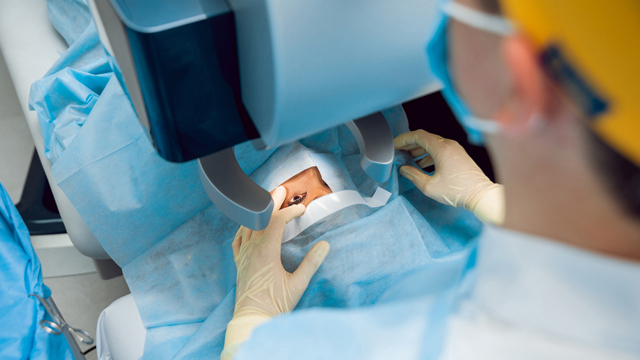 \n\n### Step 1: Comprehensive Eye Exam\nPatients undergo a detailed diagnostic evaluation assessing lens clouding severity, corneal health, retinal condition, and overall ocular health, forming the basis for determining cataract severity and candidacy for Laser Multifocal Cataract Surgery.\n\n### Step 2: Personalized Surgical Plan\nBased on the exam findings, the surgical team determines the appropriate intraocular lens type and surgical approach, taking into account the patient's degree of lens clouding, any coexisting eye conditions, and their visual goals across near, intermediate, and distance ranges.\n\n### Step 3: Ongoing Follow-Up\nFollowing Laser Multifocal Cataract Surgery, patients receive scheduled follow-up examinations to monitor healing, intraocular pressure, and visual outcomes across focal ranges, with multilingual coordination available throughout the recovery period for patients traveling from abroad to our Busan clinic.\n\n## Take the Next Step Toward Clearer Vision in Busan\nCloudy, dimmed, or glare-affected vision doesn't have to be a permanent part of aging. Our cataract surgery team at Busan BGSS Eye Clinic is ready to begin with a thorough Comprehensive Eye Exam and help you understand whether Laser Multifocal Cataract Surgery may restore clearer vision across near, intermediate, and distance ranges.\n\nPrimary CTA: Schedule a Consultation\n\nReach out today to arrange your Comprehensive Eye Exam with our cataract surgery team in Busan and take the first step toward understanding your cataract treatment options.\n\nSecondary contact: Speak with our multilingual patient care team for scheduling and consultation inquiries.
Related Services
Explore our comprehensive range of healthcare offerings tailored to your needs.
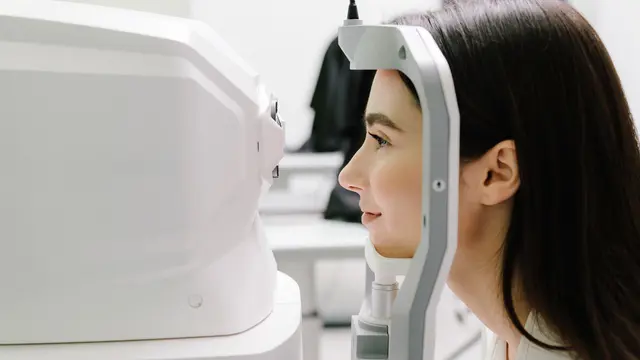
Dry Eye Diagnostic Testing
It is a spectrum of disorders with distinct underlying mechanisms — each requiring a different clinical response.
Learn More

Aqua IPL / Aqua Lifting
Dry eye syndrome is one of the most common and undertreated conditions in ophthalmology — affecting contact lens wearers, digital screen users, post-surgical patients, and adults over 40 with progressively declining tear film quality.
Learn More
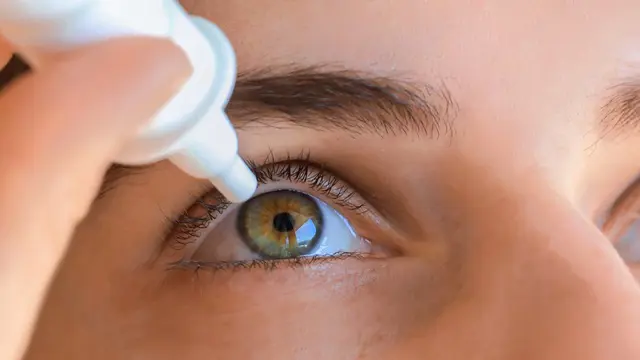
Autologous Serum Eye Drops
Autologous serum eye drops are a specialized therapeutic preparation in which a patient's own blood is processed to extract the serum — which is then formulated as personalized eye drops.
Learn More