Busan BGSS Eye Clinic · JCI-Accredited Ophthalmology Since 1997 · 7-Language Patient Care
JCI-Accredited · Since 1997
en-US
Pediatric Myopia Control · Needs Clinic Confirmation
Ortho-K / Dream Lens
Orthokeratology — known in Korea as Dream Lens (드림렌즈) — is a non-surgical myopia management approach in which specially designed rigid gas-permeable contact lenses are worn overnight while sleeping.
Schedule a ConsultationWhat Is Orthokeratology? Dream Lens for Childhood Myopia in Busan
Orthokeratology — known in Korea as Dream Lens (드림렌즈) — is a non-surgical myopia management approach in which specially designed rigid gas-permeable contact lenses are worn overnight while sleeping. The lenses apply gentle, precisely calculated pressure to temporarily reshape the corneal epithelium — flattening the central cornea during the wearing period. When the lenses are removed in the morning, the temporarily reshaped corneal surface provides clear, unaided daytime vision without glasses or contact lenses for the full day. By the following night, the cornea gradually returns to its natural shape, and the cycle repeats with nightly lens wear.
At Busan BGSS Eye Clinic in Seomyeon, Busanjin-gu, orthokeratology serves two simultaneous clinical purposes: it provides practical glasses-free daytime vision correction for children during school, sports, and daily activities — a significant quality-of-life benefit for active children who find glasses inconvenient — and it reduces the rate of myopia progression by creating a peripheral corneal defocus profile that suppresses the retinal signaling mechanism driving axial elongation. This dual function distinguishes orthokeratology from glasses and standard daytime contact lenses, which correct myopia optically but provide no biological myopia control effect at the Busanjin-gu, Busan facility.
Dream Lens fitting at the Seomyeon, Busanjin-gu clinic requires precise corneal topographic mapping to design lenses that reshape the cornea accurately to each child's individual corneal curvature — and ongoing monitoring to confirm that lens fit remains appropriate as the child grows and the myopia management program continues. Dr. Jong-Ho Park's pediatric retina expertise provides the clinical foundation for evaluating not only the refractive and corneal aspects of Dream Lens therapy but the retinal health of myopic children throughout the treatment period at the Busanjin-gu, Busan facility.
How Dream Lens Controls Myopia: The Clinical Mechanism
Orthokeratology's myopia control effect is produced by the peripheral defocus profile it creates on the cornea. Standard single-vision glasses and contact lenses correct central myopia but focus peripheral light rays behind the retina — a peripheral hyperopic defocus pattern that research suggests stimulates axial elongation as the eye attempts to bring peripheral images into focus. Orthokeratology reverses this pattern: the flattened central cornea corrects central vision, while the mid-peripheral corneal profile created by overnight reshaping causes peripheral light to focus in front of or on the peripheral retina — a relative peripheral myopic defocus that suppresses the axial elongation signal at the Seomyeon, Busanjin-gu clinic.
This peripheral defocus mechanism is why orthokeratology reduces myopia progression rather than simply correcting it. Clinical studies show that orthokeratology reduces axial elongation rate by approximately 30–50% compared with standard glasses correction — a meaningful reduction in the total myopia accumulated by adulthood. At the Busanjin-gu, Busan clinic, axial length measurement at every follow-up appointment provides the objective data to confirm whether the Dream Lens program is achieving the expected progression reduction for each individual child, and to adjust the management approach if progression continues at an unacceptable rate at the Seomyeon facility.
Who Is a Candidate for Dream Lens Orthokeratology in Busan?
Dream Lens fitting at Busan BGSS Eye Clinic in Seomyeon is appropriate for children with progressing myopia who are motivated to achieve daytime glasses-free vision and whose parents are committed to the nightly lens care routine the program requires. Dr. Jong-Ho Park and the team at the Busanjin-gu, Busan clinic evaluate each child's corneal profile, refractive prescription, progression rate, and lifestyle before recommending Dream Lens or an alternative myopia control approach.
Ideal candidates include:
Children aged approximately 6–18 with myopia of -0.50D to -6.00D — the prescription range most effectively managed with orthokeratology at the Seomyeon clinic; children with low-to-moderate myopia and active progression benefit most
Those with progressive myopia — where serial refraction or axial length measurements at the Busanjin-gu, Busan facility confirm ongoing progression that warrants active myopia control intervention
Physically active children and adolescents — participation in sports, swimming, martial arts, and other activities where glasses are impractical or unsafe makes daytime correction-free vision a significant functional advantage at the Seomyeon clinic
Children who find daytime contact lenses difficult to manage — overnight wear removes the need for school-hour lens insertion and removal, simplifying the correction routine for children and parents at the Busan facility
Those whose parents prefer a non-pharmacological myopia control approach — orthokeratology provides clinically meaningful progression reduction without daily medication at the Seomyeon, Busanjin-gu clinic
Children considering combined therapy — orthokeratology can be used alongside low-dose atropine for enhanced myopia control in rapidly progressing cases, providing both optical and pharmacological suppression of axial elongation at the Busan BGSS facility
International families visiting Busan who want a comprehensive myopia control program evaluation with multilingual coordination and clear guidance on lens management
Dream Lens is not appropriate for very high myopia beyond the effective orthokeratology range, children with significant corneal irregularity or very flat/steep corneas that cannot be safely fitted, or children whose parents cannot commit to the nightly care routine the program requires. Our team at the Seomyeon clinic evaluates all candidacy factors and recommends alternatives — including low-dose atropine — where orthokeratology is not the optimal choice.
Meet the Pediatric Myopia Specialist at Busan BGSS Eye Clinic, Seomyeon

Dr. Jong-Ho Park, M.D.
Ophthalmologist
Dr. Jong-Ho Park, M.D., Master of Medicine Director, Busan BGSS Eye Clinic | Associate Professor of Retina, Yangsan Pusan National University Hospital | Associate Professor of Pediatric Retina, Pusan National University Children's Hospital | Ophthalmic Mentor
Dr. Jong-Ho Park anchors the pediatric myopia control program at the Seomyeon, Busanjin-gu clinic through his dual academic appointments in retina and pediatric retina at two Pusan National University hospitals. His clinical expertise in retinal disease — including vitreoretinal surgery, macular surgery, and neuro-ophthalmology — provides the clinical depth to evaluate and monitor the retinal implications of progressive childhood myopia that general practitioners managing orthokeratology do not typically assess.
For myopic children wearing Dream Lens at the Busanjin-gu, Busan clinic, Dr. Jong-Ho Park's retinal monitoring capability means that the peripheral retinal changes, lattice degeneration, and vitreoretinal interface abnormalities that accumulate in progressively elongating eyes are evaluated at scheduled intervals — not only the refraction and axial length progression that standard myopia management tracks. This retinal surveillance component positions the BGSS Dream Lens program as a clinically comprehensive myopia management service rather than a lens-fitting service at the Seomyeon facility.
Dr. Gil-Ho Park's contact lens expertise — reflected in his membership of the Korean Contact Lens Society and the Contact Lens Research Society of the United States — additionally supports the technical lens fitting and management aspects of the Dream Lens program at the Busan BGSS clinic.
Dream Lens Fitting Process and What to Expect

Dream Lens fitting at Busan BGSS Eye Clinic in Seomyeon, Busanjin-gu requires a structured assessment and trial period before the final lens parameters are confirmed:
Pre-Fitting Corneal and Refractive Assessment — Corneal topography using Galilei G4 and Pentacam at the Seomyeon clinic maps the anterior corneal surface in precise detail — providing the curvature, eccentricity, and irregularity data needed to calculate Dream Lens parameters for each child's individual cornea. Cycloplegic refraction confirms the accurate myopic prescription, and axial length measurement at the Busanjin-gu, Busan facility establishes the pre-treatment baseline for progression monitoring.
Trial Lens Selection and Initial Fitting Assessment — Trial Dream Lens parameters are calculated from the corneal topography data at the Seomyeon clinic. The lenses are dispensed with fitting instructions and the child wears them overnight at home. At the following morning visit, our team assesses lens centration, corneal reshaping pattern, and early visual response using topography-guided evaluation at the Busanjin-gu, Busan facility.
Parameter Refinement — Based on morning-after topography and visual acuity assessment at the Seomyeon, Busanjin-gu clinic, lens parameters are refined if needed to optimize the reshaping profile and visual correction. Multiple fitting iterations may be required to achieve the ideal lens design for each individual corneal profile.
Final Lens Manufacture and Dispensing — Once the optimal parameters are confirmed at the Busan BGSS facility, the final Dream Lens is manufactured and dispensed with comprehensive insertion, removal, and care training. Children and parents receive clear guidance on the nightly lens care routine — cleaning, disinfection, and storage — essential for maintaining lens hygiene and corneal health throughout the program.
Regular Follow-Up and Axial Length Monitoring — Children on Dream Lens therapy at the Seomyeon, Busanjin-gu clinic attend follow-up visits every three to six months for axial length measurement, cycloplegic refraction, corneal topography, and lens fit assessment. Axial length measurement is the primary endpoint — confirming whether the Dream Lens program is achieving the expected suppression of axial elongation for each child at the Busan facility. Lens parameters are adjusted if the corneal response changes as the child grows.
Retinal Health Surveillance — Dr. Jong-Ho Park conducts annual fundus examination for all myopic children in the Dream Lens program at the Seomyeon clinic — monitoring for peripheral retinal changes, vitreoretinal abnormalities, and macular changes associated with progressive axial elongation. Early detection of retinal pathology at the Busanjin-gu, Busan facility allows preventive intervention before vision-threatening complications develop.
Dream Lens Results, Safety, and Long-Term Management
Orthokeratology is supported by extensive clinical evidence demonstrating axial elongation reduction of approximately 30–50% compared with spectacle correction in school-age children — a clinically meaningful effect that translates to substantially lower final myopic prescriptions when treatment is maintained through the active myopia progression years. Daytime visual acuity achieved through corneal reshaping is typically functional from the first or second morning after lens wear, with optimal correction stability developing over the first two to four weeks at the Seomyeon, Busanjin-gu clinic. Individual outcomes depend on corneal topography, myopia level, progression rate, and nightly lens wear compliance; results vary and no specific outcome is guaranteed.
Dream Lens safety at the Busanjin-gu, Busan clinic is maintained through regular corneal health monitoring — ensuring that the overnight reshaping effect remains within the safe range and that the corneal epithelium is recovering appropriately between wearing sessions. The most important safety consideration in orthokeratology is microbial keratitis risk, which is minimized through strict lens hygiene protocols, preservative-free lens care solutions, and regular replacement of lens cases as instructed by our team at the Seomyeon facility. Children must discontinue Dream Lens wear in advance of specialist examinations — orthokeratology lenses 4 or more weeks before Pentacam or Galilei G4 corneal assessment, as temporary corneal reshaping can affect diagnostic measurements at the Busan BGSS clinic.
Dream Lens therapy continues throughout the active myopia progression years — typically until the mid-to-late teens when axial elongation naturally stabilizes. At that point, the program transitions to monitoring and, when appropriate, evaluation for adult vision correction options at the Seomyeon, Busanjin-gu clinic.
Why Choose Busan BGSS Eye Clinic in Seomyeon for Dream Lens Fitting?
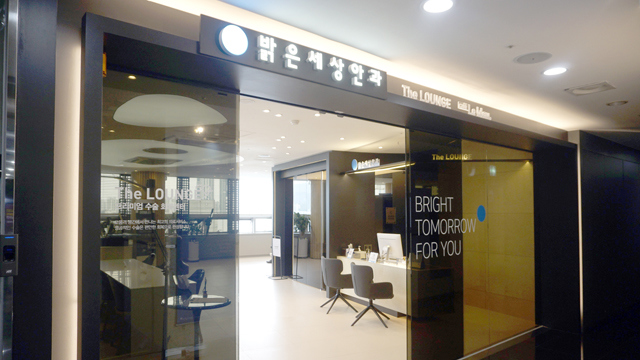
Dream Lens fitting requires precise corneal topographic expertise, clinical experience with pediatric myopia trajectories, and the retinal monitoring capability to evaluate the long-term ocular health implications of the myopia the program is treating. Busan BGSS Eye Clinic in Seomyeon, Busanjin-gu provides all three — through Galilei G4 and Pentacam dual-platform corneal mapping, Dr. Jong-Ho Park's pediatric retina specialist supervision, Dr. Gil-Ho Park's contact lens expertise, and the comprehensive myopia control program that integrates Dream Lens with low-dose atropine for children requiring enhanced progression suppression. As the founding BGSS location since 1997 with 330,000+ procedures performed, the Seomyeon clinic's credentials are clear:
First ophthalmology clinic in Korea to receive JCI accreditation — four cycles
Pediatric retina specialist supervision — Dr. Jong-Ho Park, Associate Professor of Pediatric Retina, Pusan National University Children's Hospital
Galilei G4 + Pentacam dual-platform corneal mapping for precise Dream Lens parameter determination at the Busanjin-gu, Busan facility
Axial length monitoring at every follow-up — primary myopia progression metric at the Seomyeon clinic
Retinal surveillance integrated into the pediatric myopia program — annual fundus assessment for all Dream Lens patients
Key Medical Tourism Cooperative Institution, City of Busan — multilingual support in Chinese, English, Japanese, Mongolian, Russian, Vietnamese, and Indonesian
Patient Experiences: Dream Lens at Busan BGSS Eye Clinic, Seomyeon
Patient Vignette 1 — Active Child, Age 10
A patient aged 10 was brought to the Seomyeon, Busanjin-gu clinic after myopia had progressed -1.00D in the previous year. The child played football and found glasses increasingly impractical during sport. Corneal topography at the Busan BGSS facility confirmed suitable corneal geometry for Dream Lens fitting. Following trial fitting and morning-after assessment, final lens parameters were confirmed. Axial elongation rate at the six-month follow-up was measurably lower than the pre-treatment rate, and the child was glasses-free during all daytime activities. Results vary; no outcome is guaranteed.
Patient Vignette 2 — Combined Dream Lens and Atropine, Age 12
A patient aged 12 at the Busanjin-gu, Busan clinic with high family history of myopia was progressing rapidly despite glasses correction. Dr. Jong-Ho Park recommended combined orthokeratology and low-dose atropine therapy at the Seomyeon facility to maximize progression suppression. After fitting and program initiation, axial elongation reduced substantially compared with pre-treatment measurements. Annual fundus examination identified early peripheral retinal changes that were monitored without intervention at this stage. Individual findings vary and no specific outcome is guaranteed.
Give Your Child Glasses-Free Days and a Slower Myopia Future — Book Their Dream Lens Consultation in Busan
Every year of unchecked myopia progression in childhood is accumulated retinal risk that cannot be undone. Dream Lens orthokeratology at Busan BGSS Eye Clinic in Seomyeon, Busanjin-gu gives your child daytime freedom from glasses while slowing the axial elongation that determines their lifetime eye health. Supervised by Dr. Jong-Ho Park — Associate Professor of Pediatric Retina — with Galilei G4 and Pentacam corneal mapping, axial length monitoring, and retinal surveillance, the Seomyeon clinic offers the clinical depth that pediatric myopia management deserves. JCI accredited. Multilingual support in Chinese, English, Japanese, Mongolian, Russian, Vietnamese, and Indonesian.
**[Book Your Child's Dream Lens Consultation at Busan BGSS Eye Clinic](/contact-us)
Other Services
Explore our comprehensive range of healthcare offerings tailored to your needs.
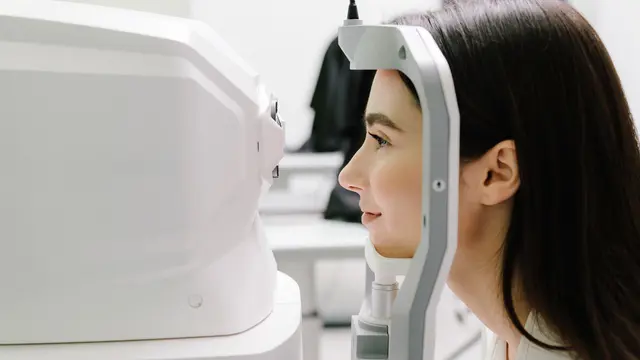
Dry Eye Diagnostic Testing
It is a spectrum of disorders with distinct underlying mechanisms — each requiring a different clinical response.
Learn More

Aqua IPL / Aqua Lifting
Dry eye syndrome is one of the most common and undertreated conditions in ophthalmology — affecting contact lens wearers, digital screen users, post-surgical patients, and adults over 40 with progressively declining tear film quality.
Learn More
Autologous Serum Eye Drops
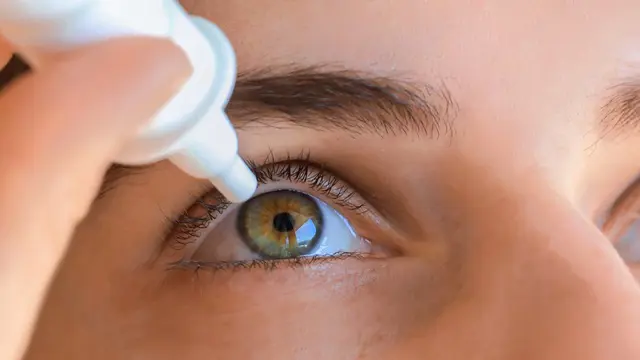
Autologous serum eye drops are a specialized therapeutic preparation in which a patient's own blood is processed to extract the serum — which is then formulated as personalized eye drops.
Learn More