Busan BGSS Eye Clinic · JCI-Accredited Ophthalmology Since 1997 · 7-Language Patient Care
JCI-Accredited · Since 1997
en-US
Pediatric Myopia Control · Needs Clinic Confirmation
MiSight 1 Day Contact Lenses
MiSight 1 Day is a soft daily disposable contact lens developed by CooperVision and clinically validated as the first contact lens to receive FDA approval specifically for slowing the progression of myopia in children.
Schedule a ConsultationWhat Is MiSight 1 Day? FDA-Approved Myopia Control for Children in Busan
MiSight 1 Day is a soft daily disposable contact lens developed by CooperVision and clinically validated as the first contact lens to receive FDA approval specifically for slowing the progression of myopia in children. Unlike standard single-vision contact lenses — which correct myopia optically but have no effect on the axial elongation driving progression — MiSight uses a dual-focus optical design with alternating correction and treatment zones to simultaneously correct distance vision and create peripheral myopic defocus, the retinal signal that suppresses axial elongation.
At Busan BGSS Eye Clinic in Seomyeon, Busanjin-gu, MiSight 1 Day is offered as part of the comprehensive pediatric myopia control program — providing a daytime-wear alternative to orthokeratology Dream Lens for children who cannot or prefer not to wear overnight lenses, and a non-pharmacological alternative to low-dose atropine for families who prefer a lens-based approach. As a daily disposable lens, MiSight eliminates the lens storage, cleaning, and disinfection routine required for reusable lenses — each lens is discarded at the end of the day, providing the simplest possible hygiene protocol and removing overnight corneal lens exposure at the Busanjin-gu, Busan facility.
The CooperVision MiSight clinical trial — the longest-running prospective myopia control contact lens study in children — demonstrated that MiSight reduces myopia progression by approximately 59% and axial elongation by approximately 52% compared with standard single-vision contact lenses over a three-year period. These figures represent the evidence base that earned MiSight its FDA indication and make it one of the most clinically validated myopia control options available at the Seomyeon, Busanjin-gu clinic.
How MiSight 1 Day Works: Dual-Focus Peripheral Defocus in Busan
MiSight's myopia control mechanism is based on the peripheral defocus principle — the same biological rationale underlying orthokeratology, but achieved through a soft lens optical design rather than overnight corneal reshaping. The MiSight lens at the Seomyeon, Busanjin-gu clinic alternates between two optical zones across its surface:
Correction zones in the central and outer portions of the lens correct the child's distance myopia — providing clear, sharp central vision throughout the wearing day at the Busan facility.
Treatment zones in the intermediate portions of the lens focus peripheral light in front of the peripheral retina rather than behind it — creating a peripheral myopic defocus signal that the retina interprets as a stop signal for axial elongation. This suppresses the scleral remodeling that would otherwise drive further axial growth and myopia progression at the Busanjin-gu, Busan clinic.
The dual-zone design ensures that both clear central vision and peripheral treatment effect are delivered simultaneously throughout every hour the child wears the lens at the Seomyeon facility — unlike orthokeratology, where the peripheral defocus profile is created by corneal reshaping that must be re-applied nightly, or low-dose atropine, which works through a pharmacological rather than optical mechanism. MiSight's effect is active during wear and requires consistent daily use to maintain its clinical benefit at the Busan BGSS clinic.
Who Is a Candidate for MiSight 1 Day in Busan?
MiSight 1 Day fitting at Busan BGSS Eye Clinic in Seomyeon is appropriate for children with progressing myopia who are ready for contact lens wear and whose families are committed to the daily wearing routine the program requires. Dr. Jong-Ho Park and the team at the Busanjin-gu, Busan clinic evaluate each child's refractive prescription, progression rate, maturity, and lifestyle before recommending MiSight or an alternative myopia control approach.
Ideal candidates include:
Children aged approximately 8–15 with myopia of -0.50D to -6.00D and documented or anticipated progression — the age and prescription range most supported by MiSight clinical evidence at the Seomyeon clinic
Children who prefer daytime lens wear over overnight orthokeratology — MiSight is worn during waking hours and removed before sleep, avoiding the overnight corneal reshaping that some children or parents find concerning at the Busanjin-gu, Busan facility
Those unsuitable for Dream Lens — children with corneal geometry outside the orthokeratology fitting range, or with prescriptions exceeding the effective orthokeratology range, who still need a lens-based myopia control option at the Seomyeon, Busanjin-gu clinic
Children who prefer a non-pharmacological approach to myopia control — MiSight provides clinically meaningful progression reduction without daily eye drops, which some children and families prefer at the Busan facility
Active children and teenagers for whom daytime sports and activities benefit from contact lens correction — MiSight provides unrestricted physical activity during wear without the handling complexity of reusable lens systems
Those already wearing standard daily disposable lenses for myopia correction who want to upgrade to a lens that simultaneously controls progression at the Seomyeon clinic
Children considering combined therapy — MiSight can be used alongside low-dose atropine at the Busanjin-gu, Busan clinic for enhanced myopia suppression in rapidly progressing cases
International families visiting Busan who want a globally available, FDA-approved myopia control lens program with specialist supervision and multilingual coordination
MiSight is not appropriate for children whose myopia is outside the fitted prescription range, those with corneal or ocular surface conditions contraindicating soft lens wear, or children too young for reliable independent lens handling. Our team at the Seomyeon clinic evaluates all candidacy factors and recommends the most appropriate myopia control pathway for each child.
Meet the Pediatric Myopia Specialist at Busan BGSS Eye Clinic, Seomyeon

Dr. Jong-Ho Park, M.D.
Ophthalmologist
Dr. Jong-Ho Park, M.D., Master of Medicine Director, Busan BGSS Eye Clinic | Associate Professor of Retina, Yangsan Pusan National University Hospital | Associate Professor of Pediatric Retina, Pusan National University Children's Hospital | Ophthalmic Mentor
Dr. Jong-Ho Park supervises the pediatric myopia control program at the Seomyeon, Busanjin-gu clinic through his concurrent academic appointments in retina and pediatric retina at two Pusan National University hospitals. His expertise in retinal disease, vitreoretinal surgery, and neuro-ophthalmology provides the clinical foundation for evaluating the retinal implications of progressive childhood myopia that extends beyond what standard myopia management assesses — ensuring that MiSight patients at the Busanjin-gu, Busan facility receive not only refractive and axial length monitoring but regular retinal surveillance for the peripheral retinal changes that accumulate in progressively elongating myopic eyes.
The BGSS multi-specialist team additionally supports the MiSight program through Dr. Gil-Ho Park's contact lens expertise — membership in the Korean Contact Lens Society and the Contact Lens Research Society of the United States directly informs the fitting protocol, material selection, and wearing schedule guidance provided to MiSight patients and families at the Seomyeon clinic.
MiSight 1 Day Fitting Process and What to Expect

MiSight fitting at Busan BGSS Eye Clinic in Seomyeon, Busanjin-gu follows a structured assessment and training process:
Pre-Fitting Assessment — Cycloplegic refraction at the Seomyeon clinic determines the accurate myopic prescription for MiSight power selection. Axial length measurement at the Busanjin-gu, Busan facility establishes the pre-treatment baseline for progression monitoring. Anterior segment examination confirms corneal health and contact lens suitability, and the child's readiness for independent lens handling is assessed.
Trial Lens Fitting — MiSight trial lenses in the confirmed prescription power are fitted at the Seomyeon, Busanjin-gu clinic. Our team assesses lens centration, movement, and comfort, and evaluates corrected visual acuity with the lens in situ. The child practices insertion and removal under supervision at the Busanjin-gu, Busan facility before being cleared for independent home use.
Lens Handling Training — Comprehensive training in MiSight insertion, removal, and daily disposal is provided for both the child and parents at the Seomyeon clinic. As a daily disposable lens, each MiSight is used once and discarded — eliminating the cleaning and storage routine of reusable lenses. Proper hand hygiene before handling and safe removal technique are emphasized at the Busan BGSS facility.
Wearing Schedule and Compliance Guidance — Our team at the Busanjin-gu, Busan clinic advises on daily wearing duration — building up gradually in the first two weeks and progressing to the full recommended wearing schedule. MiSight's myopia control effect is proportional to wearing time; consistent daily use throughout the program is important for achieving the maximum progression reduction benefit at the Seomyeon clinic.
Regular Follow-Up and Axial Length Monitoring — MiSight patients at the Seomyeon, Busanjin-gu clinic attend follow-up every three to six months for axial length measurement, cycloplegic refraction, and lens fit assessment. Axial length is the primary endpoint — confirming whether the MiSight program is suppressing axial elongation at the expected rate for each child at the Busanjin-gu, Busan facility. If progression continues at an unacceptable rate, the management approach is reviewed and adjusted — including consideration of combined atropine therapy or alternative myopia control options at the Seomyeon clinic.
Retinal Health Surveillance — Dr. Jong-Ho Park conducts annual fundus examination for all myopic children in the MiSight program at the Busan BGSS clinic — monitoring for peripheral retinal changes and vitreoretinal abnormalities associated with progressive axial elongation. Early identification of retinal pathology at the Seomyeon, Busanjin-gu facility allows preventive intervention before vision-threatening complications develop.
MiSight Results, Safety, and Long-Term Management
The CooperVision MiSight 3-year clinical trial demonstrated 59% reduction in myopia progression and 52% reduction in axial elongation compared with standard single-vision contact lenses — the evidence base for the FDA approval that distinguishes MiSight from other myopia control contact lenses without specific regulatory validation. At Busan BGSS Eye Clinic in Seomyeon, Busanjin-gu, axial length monitoring at every follow-up provides objective confirmation of whether each individual child is achieving comparable progression reduction at the Busanjin-gu, Busan facility. Individual outcomes depend on baseline prescription, progression rate, age, and wearing compliance; results vary and no specific outcome is guaranteed.
MiSight 1 Day is a soft daily disposable lens with a well-established safety profile in the age group for which it is indicated. The daily disposal protocol at the Seomyeon clinic eliminates the lens deposit accumulation and overnight contamination risks associated with reusable contact lenses — the primary safety advantage of daily disposable over reusable lens systems for children. Potential side effects include initial adaptation discomfort, mild lens awareness, and occasional transient dryness during wearing — generally resolving with the adaptation period. The most important safety consideration in any contact lens wear for children is hand hygiene and proper handling technique, which our team at the Busanjin-gu, Busan facility covers comprehensively during the fitting visit and reinforces at every follow-up.
MiSight therapy is continued throughout the active myopia progression years. As the child's prescription changes, lens powers are updated at follow-up visits at the Seomyeon, Busanjin-gu clinic. When progression naturally stabilizes in the late teens, the program transitions to monitoring and adult vision correction planning at the Busan BGSS facility.
Why Choose Busan BGSS Eye Clinic in Seomyeon for MiSight?
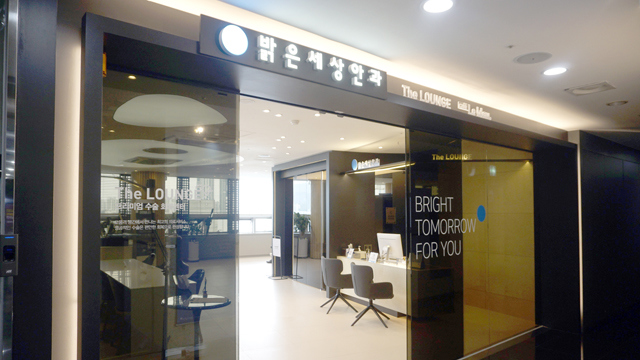
Effective MiSight therapy requires accurate refraction and axial length measurement for monitoring, clinical expertise in pediatric contact lens fitting, and the retinal surveillance capability to evaluate the long-term ocular health of myopic children throughout the program. Busan BGSS Eye Clinic in Seomyeon, Busanjin-gu provides all three — through Dr. Jong-Ho Park's pediatric retina specialist supervision, Dr. Gil-Ho Park's contact lens expertise, axial length monitoring at every follow-up, and retinal health assessment integrated into the myopia control program. As the founding BGSS location since 1997 with 330,000+ procedures performed, the Seomyeon clinic's credentials are clear:
First ophthalmology clinic in Korea to receive JCI accreditation — four cycles
FDA-approved MiSight 1 Day — the only soft contact lens with regulatory validation for myopia progression reduction in children
Pediatric retina specialist supervision — Dr. Jong-Ho Park, Associate Professor of Pediatric Retina, Pusan National University Children's Hospital at the Busanjin-gu, Busan facility
Axial length monitoring at every follow-up — primary myopia progression metric at the Seomyeon clinic
Contact lens expertise — Dr. Gil-Ho Park, Korean Contact Lens Society and Contact Lens Research Society (US) member
Key Medical Tourism Cooperative Institution, City of Busan — multilingual support in Chinese, English, Japanese, Mongolian, Russian, Vietnamese, and Indonesian
Patient Experiences: MiSight 1 Day at Busan BGSS Eye Clinic, Seomyeon
Patient Vignette 1 — Progressive Myopia, Age 10
A patient aged 10 was brought to the Seomyeon, Busanjin-gu clinic after myopia had progressed -0.75D in eight months. The family preferred daytime lens wear over overnight orthokeratology. Cycloplegic refraction confirmed -2.50D myopia, and axial length measurement established the progression baseline at the Busan BGSS facility. MiSight 1 Day was fitted and lens handling training provided. At the six-month follow-up, axial elongation was measurably lower than the pre-treatment rate. The child wore the lenses comfortably throughout school and sport activities. Results vary; no outcome is guaranteed.\n\n### Patient Vignette 2 — Unsuitable for Dream Lens, Age 13\n\nA patient aged 13 at the Busanjin-gu, Busan clinic had been assessed for orthokeratology but had corneal geometry outside the optimal Dream Lens fitting range. MiSight 1 Day was recommended as the lens-based myopia control alternative at the Seomyeon facility. Following fitting and training, the teenager adapted quickly to daily lens wear and reported no discomfort. Annual fundus examination by Dr. Jong-Ho Park at the Busan BGSS clinic found no peripheral retinal abnormalities at the first review. Individual findings vary and no specific outcome is guaranteed.\n\n## Give Your Child's Vision a Clinically Proven Head Start — Book Their MiSight Consultation in Busan\n\nMiSight 1 Day is the only soft contact lens FDA-approved to slow childhood myopia progression — and every year of effective myopia control is accumulated protection against the retinal, macular, and glaucomatous risks that high myopia creates in adulthood. The specialist team at Busan BGSS Eye Clinic in Seomyeon, Busanjin-gu offers MiSight fitting with pediatric retina specialist supervision, axial length monitoring, and retinal surveillance — the comprehensive myopia management framework your child's ocular future deserves. JCI accredited. Multilingual support in Chinese, English, Japanese, Mongolian, Russian, Vietnamese, and Indonesian.\n\n**\Book Your Child's MiSight Consultation at Busan BGSS Eye Clinic
Other Services
Explore our comprehensive range of healthcare offerings tailored to your needs.
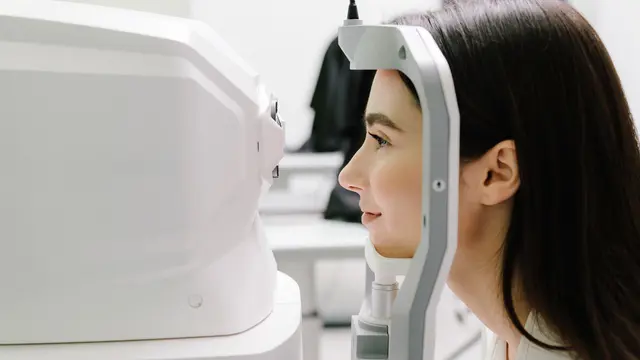
Dry Eye Diagnostic Testing
It is a spectrum of disorders with distinct underlying mechanisms — each requiring a different clinical response.
Learn More

Aqua IPL / Aqua Lifting
Dry eye syndrome is one of the most common and undertreated conditions in ophthalmology — affecting contact lens wearers, digital screen users, post-surgical patients, and adults over 40 with progressively declining tear film quality.
Learn More
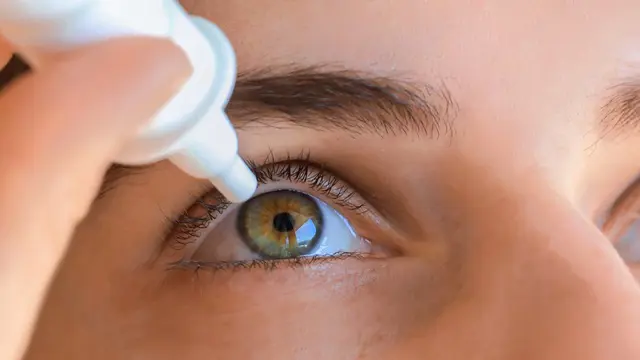
Autologous Serum Eye Drops
Autologous serum eye drops are a specialized therapeutic preparation in which a patient's own blood is processed to extract the serum — which is then formulated as personalized eye drops.
Learn More