Busan BGSS Eye Clinic · JCI-Accredited Ophthalmology Since 1997 · 7-Language Patient Care
JCI-Accredited · Since 1997
en-US
Cataract Surgery · Needs Clinic Confirmation
Laser Multifocal Cataract Surgery
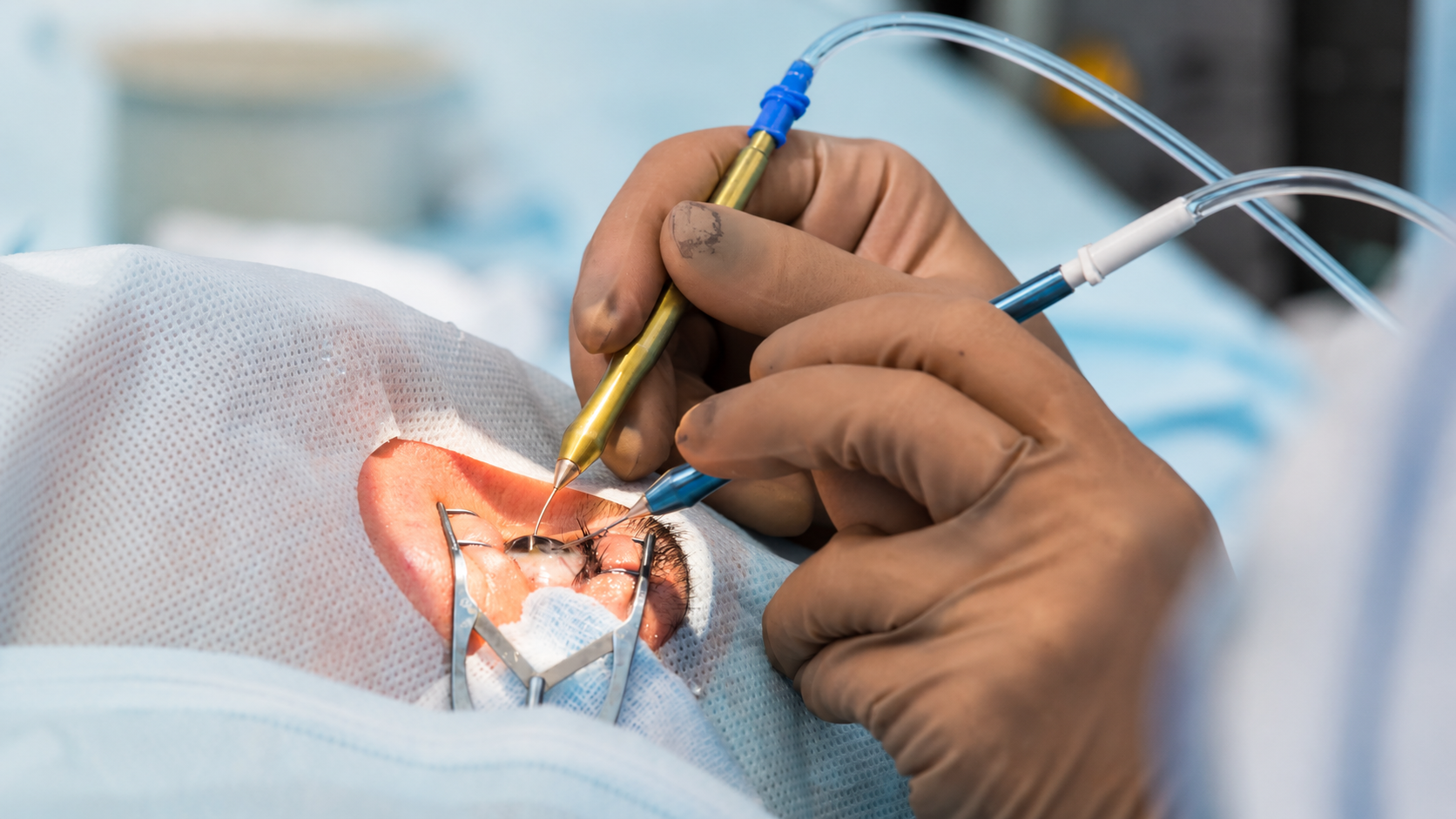
Laser multifocal cataract surgery is an all-in-one intraocular procedure that removes the clouded crystalline lens using femtosecond laser technology and replaces it with a premium multifocal IOL.
Schedule a ConsultationWhat Is Laser Multifocal Cataract Surgery? Premium Cataract and Presbyopia Correction in Busan
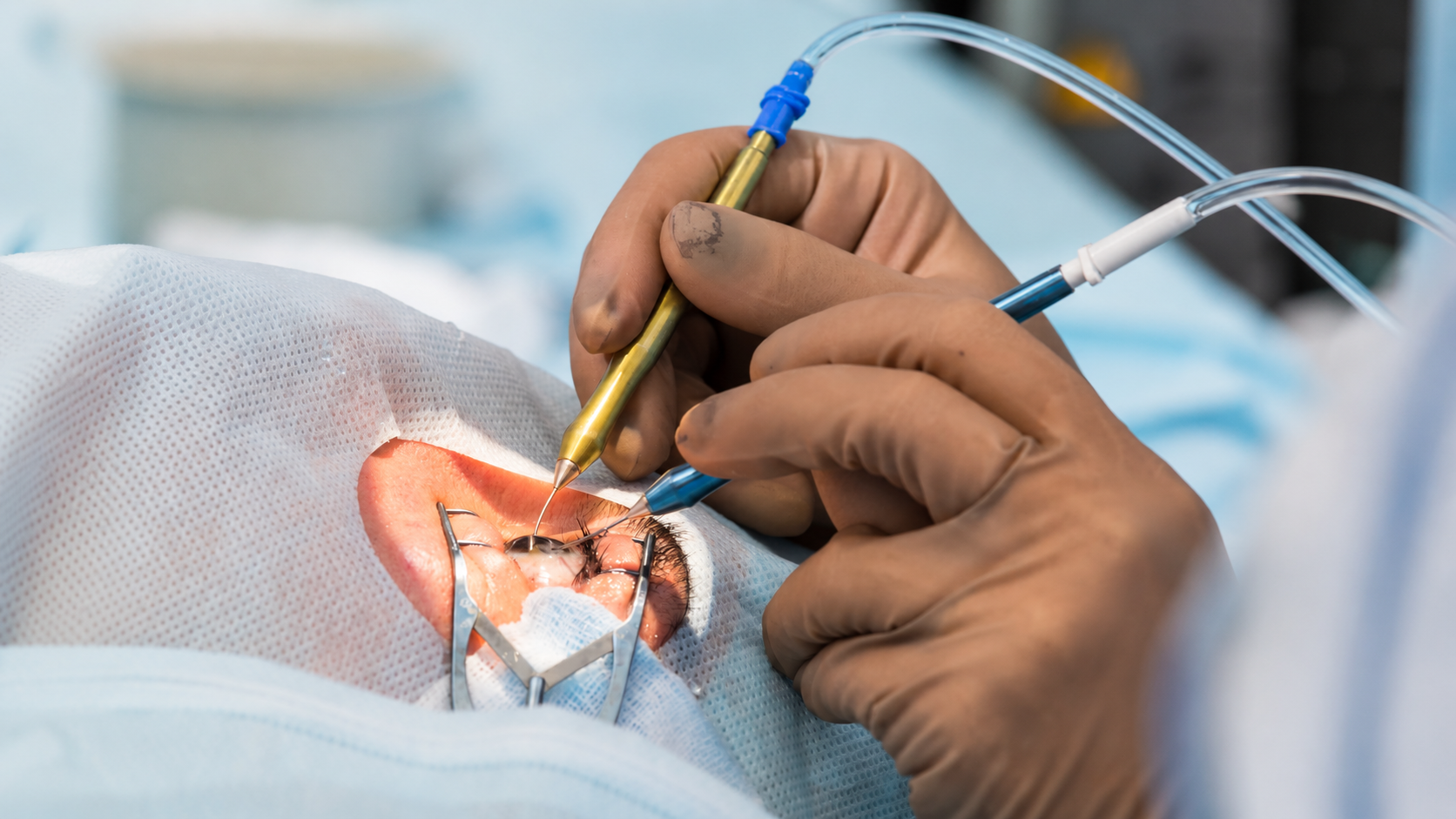
Laser multifocal cataract surgery is an all-in-one intraocular procedure that removes the clouded crystalline lens using femtosecond laser technology and replaces it with a premium multifocal IOL — simultaneously correcting cataract, presbyopia, myopia, astigmatism, and hyperopia in a single session. At Busan BGSS Eye Clinic in Seomyeon, Busanjin-gu, this procedure uniquely combines the BGSS network's 628,000 laser vision correction cases and 66,000 lens implantation cases — a dual expertise that single-specialty cataract clinics cannot replicate.
The PERFECT LINE technique at the Seomyeon clinic uses ocular CT to map the exact lens boundary before directing the femtosecond laser to follow that line precisely — producing a smooth circular capsulotomy, faster healing, and lower complication risk than blade-based surgery. Minimal ultrasound energy and real-time 3D monitoring throughout the procedure at the Busanjin-gu, Busan facility reduce surgical stress, minimize recovery time, and ensure every step is visible and adjustable. The premium multifocal IOL then restores clear near, intermediate, and far vision simultaneously — eliminating glasses dependence in daily life after surgery at the Seomyeon clinic.
Who Is a Candidate for Laser Multifocal Cataract Surgery in Busan?
Laser multifocal cataract surgery at the Seomyeon, Busanjin-gu clinic suits patients wanting the highest visual outcome from cataract surgery — particularly those wanting glasses-free vision at all distances post-operatively. Ideal candidates include:
Cataract patients wanting glasses-free daily life — multifocal IOL corrects near, intermediate, and far vision simultaneously at the Busan facility
Those with cataract plus myopia, hyperopia, or astigmatism requiring simultaneous refractive correction at the Seomyeon clinic
Patients with presbyopia and cataract wanting both addressed in one procedure at the Busanjin-gu, Busan facility
Those concerned about surgical pain — PERFECT LINE laser and minimal ultrasound at the Seomyeon clinic substantially reduce intraoperative discomfort
Patients wanting fast recovery — laser precision and reduced ultrasound energy support earlier visual rehabilitation at the Busan BGSS clinic
Those with advanced or hardened lens cataract — laser grid fragmentation minimizes ultrasound needed for dense lens removal at the Seomyeon facility
International patients traveling to Busan needing a comprehensive surgical pathway with multilingual coordination and premium recovery care
Patients for whom monofocal IOL is more clinically appropriate — including elderly patients with minimal near work — are counseled accordingly at the Busanjin-gu, Busan clinic.
Meet the Laser Cataract Surgery Specialists at Busan BGSS Eye Clinic, Seomyeon
|
|
|
|
Dr. Gil-Ho Park, M.D., Ph.D. | Dr. Jeong-Min Woo, M.D. | Dr. Byung-Uk Ko, M.D. | Dr. Jong-Ho Park, M.D. |
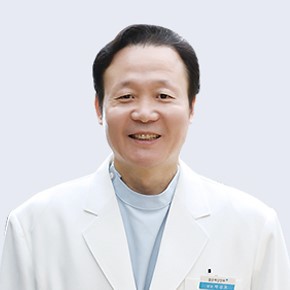
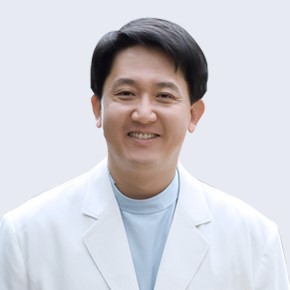

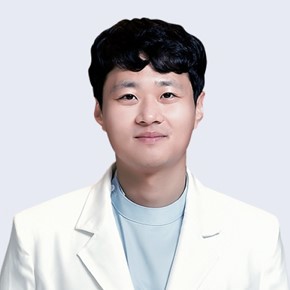
Dr. Gil-Ho Park, M.D., Ph.D. Director, Busan BGSS Eye Clinic | Visiting Professor, Sungkyunkwan University School of Medicine Dr. Park's expertise in cataract surgery and refractive surgery, combined with dual AAO and ASCRS membership, reflects an internationally benchmarked cataract surgical standard applied to every laser multifocal case at the Seomyeon, Busanjin-gu clinic.
Dr. Jeong-Min Woo, M.D. Director, Busan BGSS Eye Clinic | Visiting Professor, Dong-A University School of Medicine Dr. Woo's cataract and refractive surgery practice alongside corneal disease expertise informs IOL selection and post-operative corneal management at the Busanjin-gu, Busan facility.
Dr. Byung-Uk Ko, M.D. Director, Busan BGSS Eye Clinic | Visiting Professor, Dong-A University School of Medicine Dr. Ko's corneal wound healing research and clinical focus directly support post-cataract corneal recovery management at the Seomyeon clinic. His 2013 commendation from Korea's Minister of Health and Welfare reflects a practice built on corneal science and patient safety.
Dr. Jong-Ho Park, M.D., Master of Medicine Director, Busan BGSS Eye Clinic | Associate Professor of Retina, Yangsan Pusan National University Hospital | Associate Professor of Pediatric Retina, Pusan National University Children's Hospital Dr. Jong-Ho Park's retinal and vitreoretinal expertise ensures that cataract patients with concurrent macular degeneration, diabetic retinopathy, or epiretinal membrane at the Seomyeon, Busanjin-gu clinic receive specialist retinal assessment alongside their cataract correction — an internal multi-specialist resource unavailable at most dedicated cataract clinics in Busan.
Four Core Technologies: Laser Multifocal Cataract at Busan BGSS Eye Clinic
1. PERFECT LINE Laser Incision: Ocular CT maps the precise crystalline lens boundary at the Seomyeon clinic; the femtosecond laser follows that exact line to create a smooth, accurately sized circular capsulotomy. This eliminates blade-based incision variability, accelerates healing, and reduces complication risk at the Busanjin-gu, Busan facility.
2. Accurate Lens Positioning: The precisely sized capsulotomy opening allows the multifocal IOL to be centered exactly at the eye's optical axis at the Seomyeon, Busanjin-gu clinic. IOL centration is the primary determinant of multifocal visual quality — the BGSS team's 66,000+ lens implantation cases underpin the positioning accuracy applied at every procedure.
3. Minimal Ultrasound and Real-Time 3D Monitoring: Laser grid fragmentation pre-softens the lens before phacoemulsification at the Busan BGSS facility, dramatically reducing ultrasound energy needed — less corneal endothelial stress, faster recovery, less post-operative inflammation. Real-time 3D monitoring throughout the entire procedure enables immediate adjustment and confirms surgical accuracy at the Seomyeon clinic.
4. Combined Laser and Lens Expertise: Laser multifocal cataract surgery at the Busanjin-gu, Busan clinic draws on 628,000 laser vision correction cases and 66,000 lens implantation cases simultaneously — planning the refractive component with laser correction precision and executing the IOL component with ICL-level accuracy. This dual clinical foundation is unique to the BGSS network.
Laser Multifocal Cataract Surgery Procedure Steps and Recovery

Performed under topical anaesthetic at Busan BGSS Eye Clinic in Seomyeon, Busanjin-gu:
Pre-Operative Diagnostics and IOL Selection — Biometry, corneal topography, macular OCT, endothelial cell count, and refractive assessment at the Seomyeon clinic. Premium multifocal IOL selected from the full range of world-class lenses — US, German, Belgian, Japanese, British, and Israeli manufacturers — based on each patient's precise data and lifestyle at the Busan facility.
PERFECT LINE Laser Capsulotomy — Catalys or VICTUS femtosecond laser creates precise circular capsulotomy following ocular CT boundary mapping at the Seomyeon, Busanjin-gu clinic. ZEPTO precision capsulotomy technology available for optimized capsule sizing and IOL stability.
Laser Grid Fragmentation and Lens Removal — Femtosecond laser creates grid-pattern fragmentation of the cataract lens at the Busanjin-gu, Busan facility before CENTURION or INFINITI phacoemulsification removes the fragmented material with minimal ultrasound energy under LUMERA 700 surgical microscopy.
Premium Multifocal IOL Implantation — The selected multifocal IOL is inserted through the precise capsulotomy opening and centered exactly at the optical axis of the eye at the Seomyeon clinic. Real-time 3D monitoring confirms correct positioning throughout.
Immediate Assessment and The LOUNGE Recovery — Lens position and IOP are confirmed before the patient transfers to The LOUNGE — Busan BGSS Eye Clinic's 27-room private recovery facility with 1:1 care, temperature and humidity control, air purification, and fall prevention systems — for comfortable post-operative recovery at the Busanjin-gu, Busan location.
Follow-Up and Vision Stabilization — Regular post-operative reviews at the Seomyeon, Busanjin-gu clinic monitor IOL position, visual acuity across all distances, IOP, and corneal recovery. The multi-specialist team provides ongoing management for any age-related ocular conditions identified during follow-up at the Busan facility.
Laser Multifocal Cataract Results, Safety, and Longevity
Laser multifocal cataract surgery at Busan BGSS Eye Clinic achieves 0.8 or better vision in 96% of patients — a benchmark reflecting both the PERFECT LINE laser precision and premium IOL quality available at the Seomyeon, Busanjin-gu clinic. The combined 628,000 laser correction and 66,000 lens implantation cases in the BGSS clinical database support continuous refinement of IOL selection algorithms and surgical planning protocols at the Busanjin-gu, Busan facility. Results vary by individual and no specific outcome is guaranteed.
The safety profile of laser multifocal cataract surgery at the Seomyeon clinic is reinforced by minimal ultrasound energy reducing corneal endothelial stress, PERFECT LINE precision eliminating blade-related incision variability, and real-time 3D monitoring enabling immediate intraoperative adjustment. The sterile surgical suite with temperature, humidity, and air sterilization control at the Busan BGSS facility provides an additional environmental safety layer. Potential side effects include temporary halos around lights, a multifocal adaptation period, and mild post-operative light sensitivity — generally resolving within weeks to months. Serious complications are uncommon and pre-operative screening minimizes risk further.
Premium multifocal IOL correction is permanent and durable — the artificial lens does not degrade under normal conditions. Age-related changes in other ocular structures are monitored through the BGSS post-operative management program at the Seomyeon clinic.
Why Choose Busan BGSS Eye Clinic in Seomyeon for Laser Multifocal Cataract Surgery?
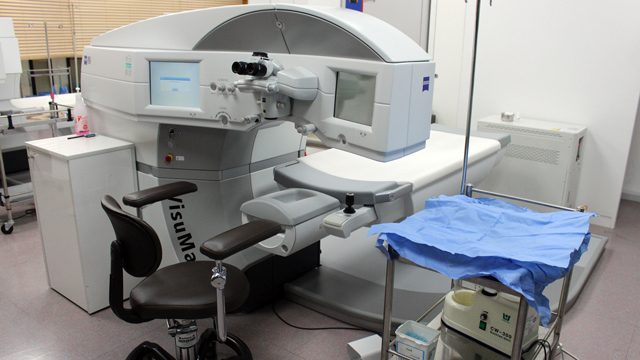
Laser multifocal cataract surgery demands two clinical skill sets simultaneously: laser refractive precision and lens implantation expertise. Busan BGSS Eye Clinic in Seomyeon, Busanjin-gu is the only clinic that combines 628,000 laser vision correction cases and 66,000 lens implantation cases in a single surgical team — with four dedicated cataract lasers, the full range of world-class premium IOLs, and a four-director specialist team covering cataract, corneal disease, and retinal surgery internally. As the founding BGSS location since 1997 with 330,000+ vision correction surgeries, the Seomyeon clinic's credentials are clear:
First ophthalmology clinic in Korea to receive JCI accreditation — four cycles
Advanced Regenerative Medicine Institution (2026) and Asia-Pacific EVO ICL Training Center (2026)
The LOUNGE — 27-room private premium recovery facility at the Busanjin-gu, Busan clinic
Four dedicated cataract lasers — Catalys, VICTUS, CENTURION, INFINITI, ZEPTO in a sterile surgical center
Key Medical Tourism Cooperative Institution, City of Busan — multilingual support in Chinese, English, Japanese, Mongolian, Russian, Vietnamese, and Indonesian
Patient Experiences: Laser Multifocal Cataract at Busan BGSS Eye Clinic, Seomyeon
Patient Vignette 1 — Cataract with Astigmatism, Early 60s
A patient in their early 60s traveling to Busan had advanced cataract with significant astigmatism and wanted glasses-free vision after surgery. Following comprehensive biometry and IOL selection at the Seomyeon, Busanjin-gu clinic, laser multifocal cataract surgery was performed using PERFECT LINE capsulotomy and a premium toric multifocal IOL. The patient achieved functional near and distance vision without glasses at the follow-up review and recovered comfortably in The LOUNGE. Results vary; no outcome is guaranteed.
Patient Vignette 2 — Advanced Hardened Lens Cataract, Late 60s
A patient in their late 60s at the Busanjin-gu, Busan clinic presented with a significantly hardened dense cataract. The laser grid fragmentation technique at the Seomyeon facility minimized the ultrasound energy required for removal, reducing post-operative inflammation and supporting faster visual recovery. Vision improved substantially at the first post-operative review. Individual results vary and no specific outcome is guaranteed.
See Clearly at Every Distance — Book Your Laser Cataract Consultation in Busan
If cataract is affecting your vision and you want to correct it — along with presbyopia, myopia, or astigmatism — in a single precise procedure with premium IOL and dedicated laser technology, the specialist team at Busan BGSS Eye Clinic in Seomyeon, Busanjin-gu is ready to evaluate your suitability for laser multifocal cataract surgery. With 628,000+ clinical cases, JCI accreditation, four dedicated cataract lasers, a four-director specialist team, and The LOUNGE premium recovery facility, the Seomyeon clinic delivers the surgical precision and post-operative care that premium cataract surgery demands. International patients are fully supported in Chinese, English, Japanese, Mongolian, Russian, Vietnamese, and Indonesian.
**[Book Your Free Laser Multifocal Cataract Consultation at Busan BGSS Eye Clinic](/contact-us)
Other Services
Explore our comprehensive range of healthcare offerings tailored to your needs.
Dry Eye Diagnostic Testing
It is a spectrum of disorders with distinct underlying mechanisms — each requiring a different clinical response.
Learn More

Aqua IPL / Aqua Lifting
Dry eye syndrome is one of the most common and undertreated conditions in ophthalmology — affecting contact lens wearers, digital screen users, post-surgical patients, and adults over 40 with progressively declining tear film quality.
Learn More
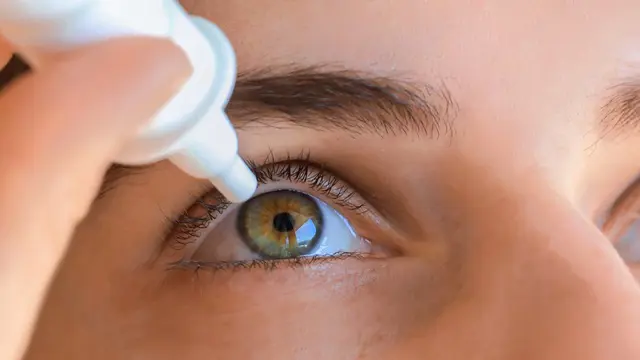
Autologous Serum Eye Drops
Autologous serum eye drops are a specialized therapeutic preparation in which a patient's own blood is processed to extract the serum — which is then formulated as personalized eye drops.
Learn More