Busan BGSS Eye Clinic · JCI-Accredited Ophthalmology Since 1997 · 7-Language Patient Care
JCI-Accredited · Since 1997
en-US

ICL (Lens Implantation) · Needs Clinic Confirmation
ICL Re-correction
ICL re-correction is the clinical pathway for patients whose vision has deteriorated following LASIK or LASEK — whether from myopic regression, corneal changes, or surgical complications.
Schedule a ConsultationWhat Is ICL Re-correction? Vision Restoration After Failed LASIK or LASEK in Busan

ICL re-correction is the clinical pathway for patients whose vision has deteriorated following LASIK or LASEK — whether from myopic regression, corneal changes, or surgical complications — and for whom repeat laser surgery is not a safe option. Revision surgery is inherently more demanding than primary correction, requiring deeper diagnostic evaluation and higher surgical precision. At Busan BGSS Eye Clinic in Seomyeon, Busanjin-gu, our team identifies the precise cause of vision decline before any surgical decision is made — and does not require previous surgical records from other clinics, conducting a full independent ocular assessment from each patient's current eye data.
Repeat laser ablation on a previously treated cornea carries serious risks: epithelial ingrowth, corneal opacity, keratoconus, and in severe cases, permanent vision loss. ICL re-correction eliminates these risks entirely by implanting a soft phakic lens between the iris and the natural crystalline lens — correcting residual refractive error without touching the cornea at all. BGSS network data documents post-re-correction outcomes of 1.0 to 1.2 corrected visual acuity across patients who presented with myopic regression following LASIK or LASEK at other clinics, with original surgeries spanning from 2003 onwards. Results vary by individual and no specific outcome is guaranteed.
Who Needs ICL Re-correction After LASIK or LASEK in Busan?
Vision deterioration after laser correction has multiple causes — our team at the Seomyeon, Busanjin-gu clinic identifies the specific reason before recommending any pathway. Patients who may benefit from ICL re-correction evaluation at the Busan facility include:
Patients with myopic regression — where correction achieved at the time of surgery has gradually reduced due to corneal or axial changes
Those with residual corneal thickness below safe re-treatment thresholds — for whom further laser ablation at the Busan facility would compromise structural integrity
Patients with deformed or irregular corneal topography from prior high astigmatism correction or post-ablation flattening
Those with severe post-laser dry eye — where repeat laser would further damage corneal nerve integrity at the Seomyeon clinic
Patients who had surgery at another clinic and present without previous records — our team conducts a full independent workup at the Busanjin-gu, Busan facility
International patients traveling to Busan for revision correction needing a thorough, multilingual evaluation pathway
Patients whose deterioration stems from presbyopia onset, progressing myopia, or active ocular disease are managed with appropriate non-surgical or specialist-routed care before any surgical timing is considered.
Our Team at Busan BGSS Eye Clinic, Seomyeon
ICL re-correction at the Seomyeon, Busanjin-gu clinic is managed by our team of five senior directors, each holding concurrent academic appointments at major regional universities in Busan. Revision cases demand clinical breadth that a single generalist cannot provide — our team's expertise spans refractive surgery, corneal disease, wound healing, retinal care, glaucoma, and oculoplastics, ensuring complex post-laser presentations are evaluated by the right specialist at the Busanjin-gu, Busan facility. Patients with severe complications such as keratoconus or retinal disease identified during pre-operative assessment are routed to dedicated specialist directors within the Seomyeon clinic rather than referred externally.
Our team's revision surgery track record is grounded in 29 years of vision correction focus and 628,000 accumulated clinical cases across the BGSS network — including extensive high-difficulty re-correction experience. The 2026 Asia-Pacific Regional Center for EVO ICL Training designation reflects the depth of ICL surgical expertise our team brings to every re-correction case at the Seomyeon, Busanjin-gu clinic.
Why ICL Is the Safest Re-correction Option After LASIK or LASEK
Repeat laser re-treatment on a previously ablated cornea risks epithelial ingrowth, corneal opacity, keratoconus, and blindness. ICL re-correction at Busan BGSS Eye Clinic avoids all of these by preserving the cornea entirely. The key advantages at the Seomyeon, Busanjin-gu clinic:
Deformed or thinned cornea not disturbed again
Near-zero myopic regression recurrence risk
No epithelial ingrowth or corneal opacity risk
Dry eye minimized rather than worsened
Near-zero keratoconus or blindness risk
Fully reversible — lens removable if clinical circumstances require it
ICL Re-correction Diagnostic Process and Surgical Planning
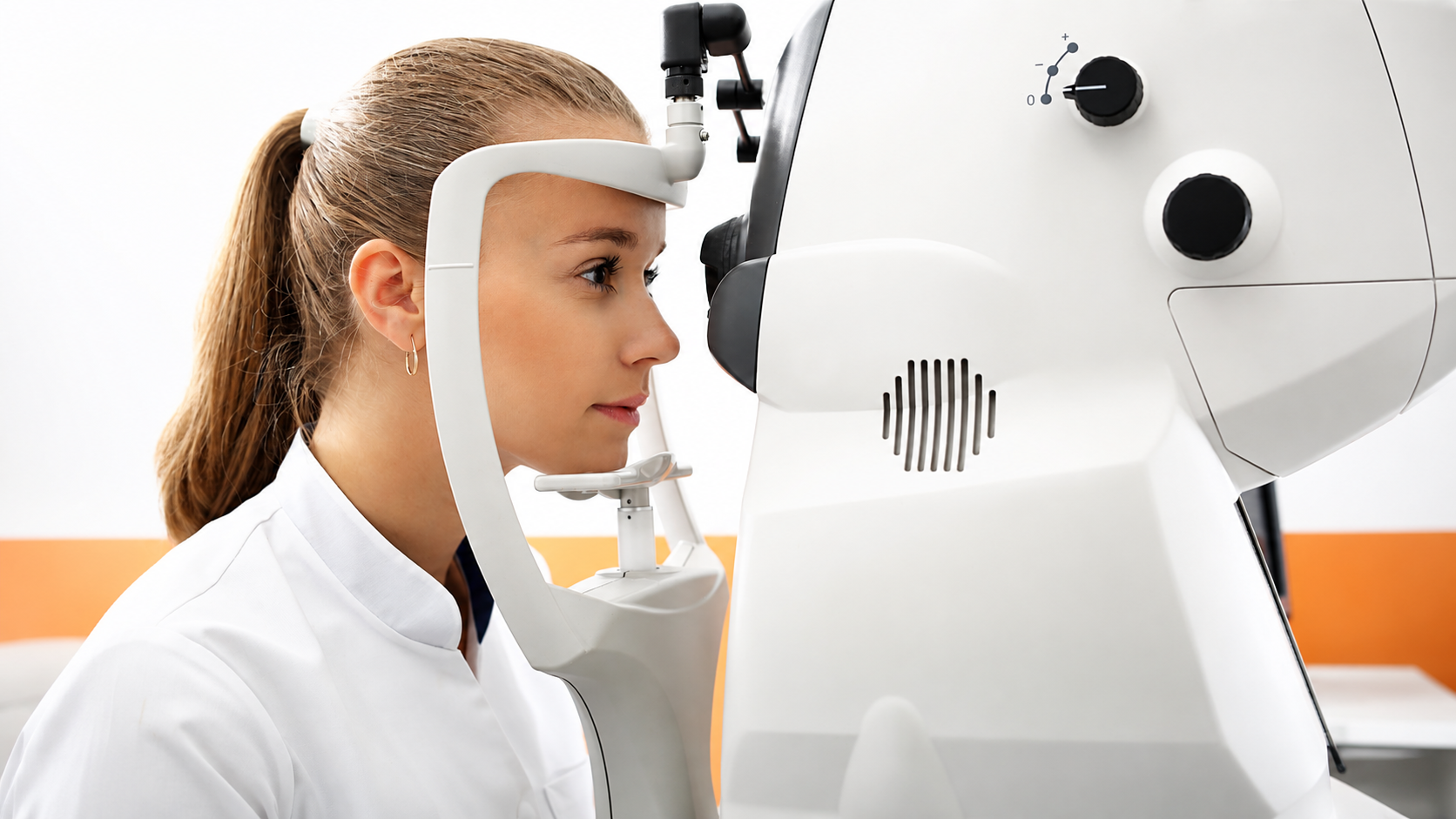
Re-correction at the Seomyeon, Busanjin-gu clinic follows a structured three-step protocol — no previous surgical records required:
Step 1 — Identifying the Cause
Our team at the Busan BGSS facility conducts comprehensive diagnostics: vision testing, corneal topography, axial length, curvature assessment, and ocular disease screening. The five primary causes evaluated are myopic regression (corneal thickness change), myopic progression (axial length change), presbyopia onset, ocular disease (dry eye, conjunctivitis, retinal conditions), and surgical complications (keratoconus, irregular astigmatism, decentration, narrow laser zone).
Step 2 — Customized Treatment Plan
Dry eye patients receive targeted care before surgical planning. Severe complications — keratoconus, retinal disease — are routed to specialist directors at the Seomyeon clinic. Patients with unstable or progressing vision are observed until stability is confirmed; surgery is not planned during active vision change at the Busanjin-gu, Busan facility.
Step 3 — Surgical Timing and ICL Eligibility
Surgery proceeds only when vision is stable and cause is addressed. ICL suitability is confirmed through cross-examination using UBM, OPD SCABC, and OCT at the Seomyeon clinic. Key eligibility criteria: anterior chamber depth ≥3.2mm and corneal endothelial cell count of 2,000–3,000. Once confirmed, the EVO+ ICL is sized precisely to each patient's intraocular dimensions at the Busan BGSS facility.
ICL Re-correction Procedure Steps and Recovery
Independent Full Ocular Assessment — Complete diagnostics at the Seomyeon clinic from current eye data; no prior records needed. Corneal shape, residual thickness, anterior chamber depth, endothelial cell count, and refraction are all evaluated at the Busanjin-gu, Busan facility.
Cross-Examination for Lens Suitability — UBM, OPD SCABC, and OCT confirm intraocular space and safe implantation thresholds at the Seomyeon, Busanjin-gu clinic.
Lens Sizing and Power Calculation — Post-laser corneal changes are factored into power calculation. Our team at the Busan BGSS clinic calculates the precise ICL size and correction power for each eye individually.
ICL Implantation — Cornea Untouched — The EVO+ ICL is inserted through a small self-sealing incision and positioned between the iris and crystalline lens at the Seomyeon facility. No ablation or flap creation occurs at any stage.
Post-Operative Assessment and Discharge — Lens position, intraocular pressure, and early vision are reviewed before discharge with prescribed drops and aftercare instructions from our team at the Busanjin-gu, Busan clinic.
Structured Follow-Up Program — Systematic post-operative monitoring of lens position, endothelial cell health, intraocular pressure, and visual stability at scheduled intervals at the Seomyeon, Busanjin-gu clinic.
ICL Re-correction Results, Safety, and Longevity
BGSS network clinical data documents consistent post-ICL re-correction outcomes of 1.0 to 1.2 corrected visual acuity across patients presenting with myopic regression following LASIK or LASEK at other clinics — original surgeries spanning from 2003 onwards, with pre-correction regression ranging from -0.5D to -3.5D myopia with varying astigmatism. Post-ICL re-correction corrected vision of 1.0 or 1.2 was achieved across all documented cases at the Seomyeon, Busanjin-gu facility. Results vary by individual and no specific outcome is guaranteed.
ICL re-correction's safety advantage over repeat laser is structural: the previously treated cornea is not disturbed, eliminating epithelial ingrowth, corneal opacity, and ectasia risks entirely. The EVO+ ICL is reversible — removable if needed. Potential side effects include temporary light sensitivity, mild halos, and transient intraocular pressure variation — generally transient as healing progresses. Serious complications are uncommon and our team's three-step pre-operative protocol minimizes risk further.
ICL re-correction delivers stable, long-term vision with near-zero regression recurrence. Unlike repeat laser, the cornea-preserving approach removes the structural mechanisms that drive regression in re-treated eyes. Age-related changes such as presbyopia develop independently and are discussed openly with every patient at the pre-operative consultation at the Busan BGSS clinic.
Why Choose Busan BGSS Eye Clinic in Seomyeon for ICL Re-correction?
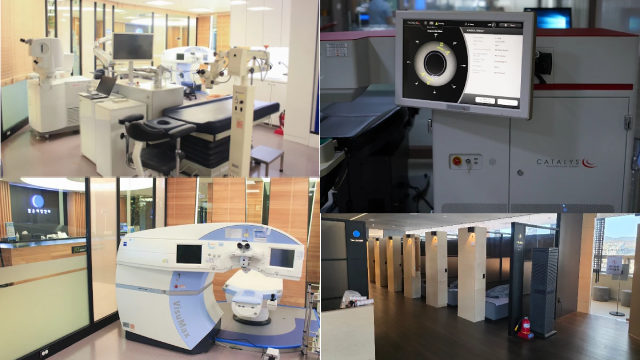
Re-correction demands a clinic with diagnostic depth, revision surgery experience, and specialist breadth. Busan BGSS Eye Clinic in Seomyeon, Busanjin-gu offers all three — with our five-director team covering every relevant subspecialty, 29 years of vision correction focus, 628,000 clinical cases, and no requirement for previous surgical records. As the founding BGSS location since 1997 with 330,000+ vision correction surgeries, the Seomyeon clinic's credentials are clear:
First ophthalmology clinic in Korea to receive JCI accreditation — four cycles
Asia-Pacific Regional Center for EVO ICL Training (2026) and Advanced Regenerative Medicine Institution (2026)
628,000 clinical cases and extensive high-difficulty revision surgery experience
No previous surgical records required — full independent assessment at the Seomyeon, Busanjin-gu clinic
Key Medical Tourism Cooperative Institution, City of Busan — multilingual support in Chinese, English, Japanese, Mongolian, Russian, Vietnamese, and Indonesian
Patient Experiences: ICL Re-correction at Busan BGSS Eye Clinic, Seomyeon
Patient Vignette 1 — Myopic Regression After LASIK, Early 30s
A patient in their early 30s traveled to Busan after experiencing progressive vision decline following LASIK at another clinic in 2015. Arriving without previous records, our team at the Seomyeon clinic conducted a full independent assessment confirming myopic regression with residual corneal thickness below safe re-laser thresholds. ICL re-correction was performed and 1.2 corrected vision was achieved at post-operative review — without further corneal alteration. Results vary; no outcome is guaranteed.
Patient Vignette 2 — Post-LASEK Dry Eye and Irregular Cornea, Late 20s
A patient in their late 20s at the Busanjin-gu, Busan clinic presented with significant dry eye and irregular corneal topography following LASEK elsewhere. Repeat laser was assessed as high-risk. Following dry eye management and vision stabilization, our team at the Seomyeon facility performed ICL re-correction. Corrected vision stabilized at 1.0 with reduced dry eye symptoms at follow-up. Individual results vary and no specific outcome is guaranteed.
Restore Your Vision Safely — Book Your ICL Re-correction Consultation in Busan
If your vision has declined after LASIK or LASEK and repeat laser is not an option, our team at Busan BGSS Eye Clinic in Seomyeon, Busanjin-gu is ready to evaluate whether ICL re-correction can restore what you have lost. With 29 years of vision correction focus, 628,000 clinical cases, JCI accreditation, Asia-Pacific EVO ICL Training Center status, and no requirement for previous surgical records, the Seomyeon clinic offers the revision expertise and diagnostic depth that post-laser re-correction demands. International patients are fully supported in Chinese, English, Japanese, Mongolian, Russian, Vietnamese, and Indonesian.
**[Book Your Free ICL Re-correction Consultation at Busan BGSS Eye Clinic](/contact-us)
Other Services
Explore our comprehensive range of healthcare offerings tailored to your needs.
Dry Eye Diagnostic Testing
It is a spectrum of disorders with distinct underlying mechanisms — each requiring a different clinical response.
Learn More

Aqua IPL / Aqua Lifting
Dry eye syndrome is one of the most common and undertreated conditions in ophthalmology — affecting contact lens wearers, digital screen users, post-surgical patients, and adults over 40 with progressively declining tear film quality.
Learn More
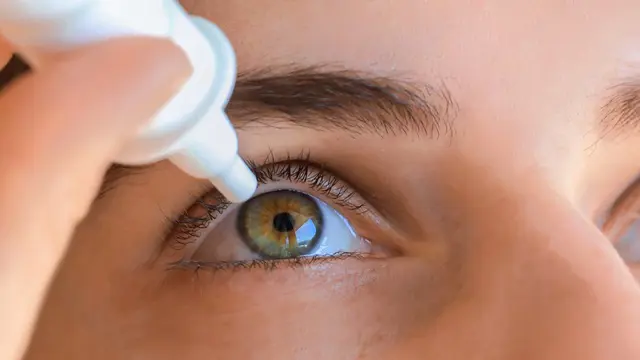
Autologous Serum Eye Drops
Autologous serum eye drops are a specialized therapeutic preparation in which a patient's own blood is processed to extract the serum — which is then formulated as personalized eye drops.
Learn More