Busan BGSS Eye Clinic · JCI-Accredited Ophthalmology Since 1997 · 7-Language Patient Care
JCI-Accredited · Since 1997
en-US

Retina & Glaucoma Care · Needs Clinic Confirmation
Glaucoma Treatment
Glaucoma is a progressive optic neuropathy in which damage to the optic nerve — causes irreversible loss of retinal nerve fibers and a characteristic pattern of visual field loss.
Schedule a ConsultationWhat Is Glaucoma? Understanding the Silent Threat to Your Vision in Busan

Glaucoma is a progressive optic neuropathy in which damage to the optic nerve — most commonly associated with elevated intraocular pressure — causes irreversible loss of retinal nerve fibers and a characteristic pattern of visual field loss. As the optic nerve deteriorates, peripheral vision is gradually lost first, with central vision typically preserved until advanced stages. This peripheral-first progression makes glaucoma one of the most dangerous eye diseases in clinical practice: patients frequently have no awareness of vision loss until the disease has already caused substantial and permanent damage to the optic nerve.
Glaucoma and retinal disease are two of Korea's three leading causes of blindness, with prevalence increasing significantly with age. A particularly important subtype is normal tension glaucoma — in which optic nerve damage occurs despite intraocular pressure readings within the statistically normal range — making IOP measurement alone an insufficient screening tool. At Busan BGSS Eye Clinic in Seomyeon, Busanjin-gu, glaucoma diagnosis relies on a multi-parameter assessment combining IOP measurement, Humphrey visual field analysis, OCT retinal nerve fiber layer imaging, and fundus examination — because no single test provides a complete picture of glaucomatous damage at the Busanjin-gu, Busan facility.
The BGSS Retina & Glaucoma Center's one-click treatment system delivers the full diagnostic and treatment pathway for glaucoma within the same Seomyeon clinic — eliminating the referral delays, repeated testing, and fragmented follow-up that characterize glaucoma management at large university hospital systems, while providing tertiary-level equipment and specialist care without the additional consultation fees those institutions charge.
Who Needs Glaucoma Evaluation in Busan?
Glaucoma is largely asymptomatic until significant optic nerve damage has occurred. The specialist team at Busan BGSS Eye Clinic in Seomyeon identifies glaucoma risk and disease at the earliest detectable stage. Patients who should seek evaluation at the Busanjin-gu, Busan clinic include:
Adults over 40 with no current eye symptoms — glaucoma prevalence rises significantly from midlife; regular IOP, visual field, and OCT screening at the Seomyeon clinic is recommended from this age
Those with elevated intraocular pressure identified during a routine eye examination — ocular hypertension requires monitoring and may require treatment to prevent optic nerve damage at the Busan facility
Patients with a family history of glaucoma — first-degree relatives of glaucoma patients carry significantly elevated risk and require earlier and more frequent surveillance at the Seomyeon, Busanjin-gu clinic
Those with high myopia — extreme myopia is an independent risk factor for glaucoma and normal tension glaucoma, and requires regular optic nerve and visual field monitoring
Patients already diagnosed with glaucoma at another clinic seeking ongoing management or a second opinion at the Busanjin-gu, Busan facility
Those with diabetes or systemic hypertension — both conditions are associated with increased glaucoma risk and require regular optic nerve screening at the Seomyeon clinic
Patients who have used long-term corticosteroid medications — steroid-induced IOP elevation is a recognized glaucoma risk factor requiring monitoring
International patients traveling to Busan requiring glaucoma assessment, treatment initiation, or management continuity with multilingual coordination
Meet the Glaucoma Specialists at Busan BGSS Eye Clinic, Seomyeon
|
|
|
Dr. Hyun-Uk Shin, M.D. | Dr. Jong-Ho Park, M.D. | Dr. Jeong-Min Woo, M.D. |



Dr. Hyun-Uk Shin, M.D. Director, Busan BGSS Eye Clinic | Visiting Professor, Dong-A University School of Medicine | Public Health Physician, Ministry of Health and Welfare Dr. Shin is the primary glaucoma specialist at the Seomyeon, Busanjin-gu clinic, with clinical expertise covering glaucoma management, retinal disease, vitreoretinal surgery, and neuro-ophthalmology. His published research includes a clinical study of Brinzolamide 1%/Brimonidine 0.2% fixed combination therapy in normal tension glaucoma — published in the Journal of the Korean Ophthalmological Society in 2016 — reflecting an evidence-based, pharmacologically grounded approach to glaucoma management at the Busan BGSS facility. His additional expertise in preoperative factors affecting vitrectomy outcomes further informs the integrated posterior segment approach he applies to complex glaucoma cases at the Seomyeon clinic.
Dr. Jeong-Min Woo, M.D. Director, Busan BGSS Eye Clinic | Visiting Professor, Dong-A University School of Medicine | Clinical Instructor, Dong-A University Hospital Dr. Woo's clinical scope includes glaucoma-related care alongside cataract surgery, corneal disease, and ocular adnexal conditions. His published research includes a comparative study of Humphrey Perimetry and Humphrey Matrix across normal, ocular hypertension, glaucoma suspect, and glaucoma patient groups — presented at the Chinese Ophthalmological Society — reflecting a research-informed understanding of glaucoma diagnostic assessment that he applies at the Busanjin-gu, Busan clinic. His additional research on OCT retinal nerve fiber layer changes correlated with visual field examination contributes to the multi-parameter diagnostic approach used at the Seomyeon facility.
Dr. Jong-Ho Park, M.D., Master of Medicine Director, Busan BGSS Eye Clinic | Associate Professor of Retina, Yangsan Pusan National University Hospital Dr. Jong-Ho Park's retina and neuro-ophthalmology expertise supports the Retina & Glaucoma Center's management of patients in whom glaucomatous optic nerve disease intersects with retinal or neuro-ophthalmic pathology — including cases of optic neuropathy and combined glaucoma-retinal presentations at the Seomyeon, Busanjin-gu clinic.
The three specialists managing glaucoma at Busan BGSS Eye Clinic share a consistent approach: glaucoma is a lifelong condition requiring precise staging, individualized treatment, and disciplined long-term monitoring — and the one-click system at the Seomyeon clinic makes that sustained engagement clinically and economically practical.
Glaucoma Diagnosis and Monitoring at Busan BGSS Eye Clinic
Accurate glaucoma diagnosis requires multiple converging data points — no single test is sufficient. The Retina & Glaucoma Center at the Seomyeon, Busanjin-gu clinic uses a multi-parameter diagnostic protocol:
Intraocular Pressure Measurement: IOP is the most established glaucoma risk factor and the primary modifiable target in glaucoma treatment. However, up to 30–40% of glaucoma in Korean patients — particularly normal tension glaucoma — occurs at IOP within the statistically normal range. IOP measurement at the Busanjin-gu, Busan clinic is therefore interpreted alongside structural and functional assessments rather than in isolation.
Humphrey Visual Field Analysis: Visual field testing at the Seomyeon clinic maps the functional extent of the patient's peripheral vision, detecting the characteristic arcuate scotomas and nasal step defects of glaucomatous damage. Dr. Jeong-Min Woo's published research comparing Humphrey Perimetry and Humphrey Matrix across the full glaucoma spectrum directly informs the diagnostic approach used at the Busan BGSS facility.
OCT Retinal Nerve Fiber Layer Imaging: OCT imaging at the Seomyeon, Busanjin-gu clinic provides high-resolution cross-sectional measurement of the retinal nerve fiber layer — detecting structural thinning from glaucomatous damage that may precede measurable visual field loss by months or years. The correlation between OCT nerve fiber layer changes and visual field progression, studied by Dr. Jeong-Min Woo and published at the 94th Korean Ophthalmological Society Congress, underpins the sequential monitoring protocol used at the Busan facility.
Fundus Examination and Optic Disc Assessment: Slit lamp biomicroscopy and fundus photography at the Busanjin-gu, Busan clinic allow direct assessment of optic disc morphology — cup-to-disc ratio, rim tissue integrity, peripapillary atrophy, and disc hemorrhage — all of which contribute to glaucoma staging and progression monitoring at the Seomyeon clinic.
Glaucoma Treatment Options at Busan BGSS Eye Clinic
Medication Management: The primary treatment for most glaucoma presentations at the Seomyeon, Busanjin-gu clinic is IOP-lowering pharmacotherapy — eye drops targeting aqueous humor production or outflow to reduce intraocular pressure and slow optic nerve damage progression. Dr. Hyun-Uk Shin's published research on fixed combination Brinzolamide/Brimonidine therapy in normal tension glaucoma — a subtype where standard IOP targets may need to be lower — reflects the evidence-based medication selection approach at the Busan BGSS facility. Treatment regimens are individualized based on glaucoma type, IOP level, optic nerve status, and patient tolerance.
Laser Treatment: Laser trabeculoplasty and other laser-based IOP reduction procedures are available at the Seomyeon clinic for patients whose glaucoma is not adequately controlled with medication alone, or for whom medication side effects limit compliance. Laser treatment at the Busanjin-gu, Busan facility is selected based on glaucoma subtype, angle anatomy, and prior treatment history.
Surgical Management: For advanced glaucoma or cases where medication and laser have failed to achieve target IOP, surgical intervention — including trabeculectomy and glaucoma drainage procedures — is available through the Retina & Glaucoma Center at the Seomyeon, Busanjin-gu clinic. The center's tertiary-level surgical equipment and specialist team capability make it one of the few ophthalmology clinics outside a university hospital setting in Busan able to offer the full spectrum of glaucoma surgical options.
Glaucoma Results, Safety, and Long-Term Management
Glaucoma cannot be cured — lost optic nerve tissue and the visual field it supported cannot be regenerated. The goal of glaucoma management at Busan BGSS Eye Clinic in Seomyeon, Busanjin-gu is to slow or halt disease progression, preserving the vision that remains. With consistent treatment and regular monitoring at the Busanjin-gu, Busan clinic, many patients maintain functional vision throughout their lifetime. Individual outcomes depend on disease stage at diagnosis, glaucoma subtype, treatment response, and adherence to long-term management — no specific outcome is guaranteed.
The safety of glaucoma treatment at the Seomyeon clinic is supported by evidence-based medication selection, regular IOP and structural monitoring, and the multi-parameter assessment protocol that detects progression at the earliest measurable stage. Long-term management at the Busan BGSS facility follows a scheduled review protocol — with Humphrey visual field testing, OCT nerve fiber layer imaging, and IOP measurement at defined intervals — adjusted based on disease activity and treatment response. For patients with concurrent retinal disease, the integrated retina and glaucoma specialist team at the Seomyeon clinic manages both conditions without external referral.
Regular screening from age 40, and more frequently from age 60, is recommended at the Busanjin-gu, Busan clinic — both for patients with known risk factors and for those with no current symptoms, as glaucoma's silent progression makes population-level screening essential for early detection.
Why Choose Busan BGSS Eye Clinic in Seomyeon for Glaucoma Treatment?
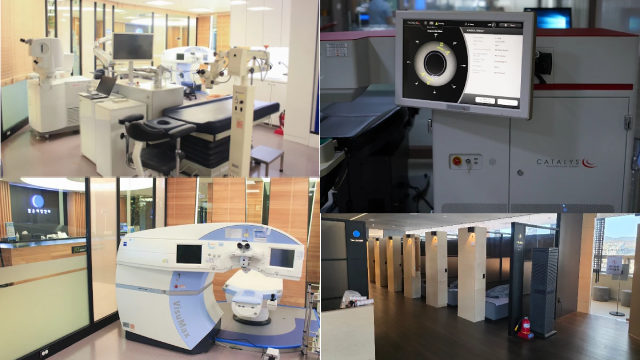
Effective glaucoma management requires a clinic with the diagnostic depth to detect damage before symptoms appear, the specialist expertise to individualize treatment across a wide spectrum of glaucoma presentations, and the long-term management infrastructure to sustain the lifelong monitoring glaucoma requires. Busan BGSS Eye Clinic in Seomyeon, Busanjin-gu provides all three — through Dr. Hyun-Uk Shin's published glaucoma research and combined glaucoma-retina expertise, Dr. Jeong-Min Woo's diagnostic research on visual field and OCT correlation, and the one-click system that makes tertiary-level glaucoma care accessible without university hospital costs or fragmentation. As the founding BGSS location since 1997 with 330,000+ procedures performed, the Seomyeon clinic's credentials are clear:
First ophthalmology clinic in Korea to receive JCI accreditation — four cycles
Tertiary-level glaucoma diagnostics — Humphrey visual field, OCT nerve fiber layer, wide-angle fundus photography at the Busanjin-gu, Busan facility
One-click diagnosis to treatment — no external referral, no fragmented care pathway at the Seomyeon clinic
Economical long-term management — university hospital-level care without additional specialist fees
Key Medical Tourism Cooperative Institution, City of Busan — multilingual support in Chinese, English, Japanese, Mongolian, Russian, Vietnamese, and Indonesian
Patient Experiences: Glaucoma at Busan BGSS Eye Clinic, Seomyeon
Patient Vignette 1 — Normal Tension Glaucoma, Early 50s
A patient in their early 50s attending Busan BGSS Eye Clinic for a routine comprehensive examination at the Seomyeon, Busanjin-gu clinic had IOP within the normal range but reported occasional mild visual disturbance. OCT retinal nerve fiber layer imaging revealed early superior arcuate thinning, and Humphrey visual field testing confirmed a corresponding early nasal step defect. Normal tension glaucoma was diagnosed and fixed combination IOP-lowering therapy initiated at the Busanjin-gu, Busan facility. The patient was enrolled in the BGSS glaucoma monitoring program with three-monthly reviews. Results vary; no outcome is guaranteed.
Patient Vignette 2 — Glaucoma Suspect with Family History, Late 40s
A patient in their late 40s at the Seomyeon clinic with a parent diagnosed with glaucoma attended for their first dedicated glaucoma screening. IOP was at the upper limit of normal, with a borderline cup-to-disc ratio on fundus examination. Visual field testing was within normal limits. The patient was classified as a glaucoma suspect and enrolled in the BGSS staged monitoring program with six-monthly OCT and annual visual field reviews at the Busan BGSS facility. Individual findings vary and no diagnostic outcome is guaranteed.
Protect Your Optic Nerve — Book Your Glaucoma Consultation in Busan
Glaucoma vision loss is permanent — but when detected early and managed consistently, most patients preserve functional vision throughout their lifetime. The specialist team at Busan BGSS Eye Clinic in Seomyeon, Busanjin-gu is ready to evaluate your glaucoma risk, stage current disease, or take over long-term management from wherever you are in your glaucoma journey. JCI accredited. Tertiary-level diagnostic equipment. One-click diagnosis to treatment. Economical long-term management. Multilingual support in Chinese, English, Japanese, Mongolian, Russian, Vietnamese, and Indonesian.
**[Book Your Glaucoma Consultation at Busan BGSS Eye Clinic](/contact-us)
Other Services
Explore our comprehensive range of healthcare offerings tailored to your needs.
Dry Eye Diagnostic Testing
It is a spectrum of disorders with distinct underlying mechanisms — each requiring a different clinical response.
Learn More

Aqua IPL / Aqua Lifting
Dry eye syndrome is one of the most common and undertreated conditions in ophthalmology — affecting contact lens wearers, digital screen users, post-surgical patients, and adults over 40 with progressively declining tear film quality.
Learn More
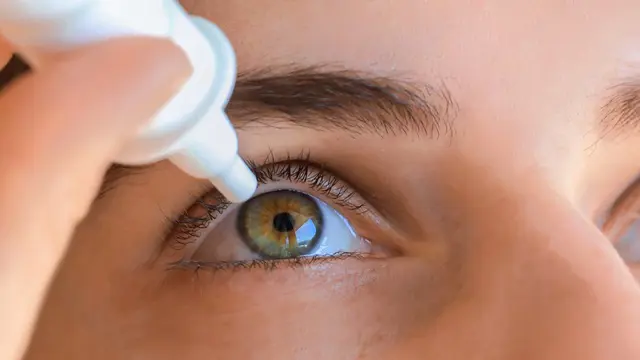
Autologous Serum Eye Drops
Autologous serum eye drops are a specialized therapeutic preparation in which a patient's own blood is processed to extract the serum — which is then formulated as personalized eye drops.
Learn More