Busan BGSS Eye Clinic · JCI-Accredited Ophthalmology Since 1997 · 7-Language Patient Care
JCI-Accredited · Since 1997
en-US

Dry Eye Syndrome Treatment · Needs Clinic Confirmation
Dry Eye Diagnostic Testing
It is a spectrum of disorders with distinct underlying mechanisms — each requiring a different clinical response.
Schedule a ConsultationWhy Dry Eye Diagnosis Matters: The Problem With Treating Symptoms Alone in Busan

More than 75% of Korean adults experience dry eye to some degree — yet the majority receive the same treatment regardless of the underlying cause: artificial tears. This one-size-fits-all approach fails a significant proportion of dry eye sufferers because dry eye is not a single condition. It is a spectrum of disorders with distinct underlying mechanisms — tear volume deficiency, tear quality impairment from Meibomian Gland Dysfunction, structural compromise from conjunctivochalasis, corneal nerve disruption from prior surgery, or inflammatory ocular surface disease — each requiring a different clinical response. Prescribing artificial tears for evaporative dry eye caused by Meibomian Gland Dysfunction is like prescribing pain relief for a structural injury: it addresses the symptom without resolving the cause.
At Busan BGSS Eye Clinic in Seomyeon, Busanjin-gu, dry eye diagnosis is the mandatory first step of every treatment pathway — not a formality, but the clinical foundation that determines whether Aqua IPL, Aqua Lifting, autologous serum eye drops, iAquaCare, or a combination protocol is the appropriate intervention for each individual patient. The BGSS dry eye diagnostic protocol uses six objective tests to characterize dry eye type, severity, and structural contributors — producing a complete clinical picture of the patient's ocular surface condition before any treatment recommendation is made at the Busanjin-gu, Busan facility.
The iAquaCare dry eye treatment methodology developed at the BGSS network is a trademarked program recognized as a global standard guideline for dry eye management — and its effectiveness depends entirely on the precision of the diagnostic process that precedes it at the Seomyeon, Busanjin-gu clinic.
Who Needs Comprehensive Dry Eye Diagnostic Testing in Busan?
The dry eye specialist team at Busan BGSS Eye Clinic in Seomyeon recommends comprehensive diagnostic testing for any patient whose dry eye symptoms suggest an underlying cause beyond simple tear volume reduction. Patients who benefit from the full six-test protocol at the Busanjin-gu, Busan clinic include:
Those using artificial tears frequently for one year or more without achieving sustained relief — indicating a structural or glandular cause that topical lubrication cannot address at the Seomyeon facility
Patients with severe daily dry eye discomfort — grittiness, morning eye adhesion, unexplained redness, heavy eyelids, or headache associated with eye fatigue
Those experiencing vision fluctuation or blurring associated with dry eye — where tear film instability causes intermittent visual disturbance rather than stable reduced acuity at the Busanjin-gu, Busan clinic
Post-LASIK, post-LASEK, and post-cataract surgery patients with new or worsening dry eye — where corneal nerve disruption or altered ocular surface anatomy requires specific identification before treatment selection at the Seomyeon clinic
Adults over 40 with dry eye symptoms and no clear systemic explanation — where age-related Meibomian gland decline may be the primary driver requiring MGD-specific treatment at the Busan facility
Long-term digital screen users — computer professionals, students, and smartphone users with chronic eye fatigue and reduced blink rate-related dryness
Contact lens wearers with persistent intolerance — where dry eye testing at the Seomyeon, Busanjin-gu clinic identifies the specific mechanism limiting wearing comfort
Patients scheduled for vision correction surgery — pre-operative dry eye assessment at the Busan BGSS facility confirms ocular surface suitability for LASIK, SMILE, or ICL and identifies conditions requiring management before surgery proceeds
International patients traveling to Busan who need a comprehensive, objective dry eye workup with multilingual coordination and a clear treatment recommendation
Meet the Dry Eye Diagnostic Specialists at Busan BGSS Eye Clinic, Seomyeon
|
|
|
Dr. Jeong-Min Woo, M.D. | Dr. Hyun-Uk Shin, M.D. | Dr. Jong-Ho Park, M.D. |



Dr. Jeong-Min Woo, M.D. Director, Busan BGSS Eye Clinic | Visiting Professor, Dong-A University School of Medicine | Clinical Instructor, Dong-A University Hospital Dr. Woo's clinical expertise in corneal disease and ocular adnexal conditions is directly applied in the dry eye diagnostic process at the Seomyeon, Busanjin-gu clinic — particularly in the interpretation of Meibomian gland function, tear film stability, and corneal surface integrity findings that guide treatment selection at the Busan facility.
Dr. Hyun-Uk Shin, M.D. Director, Busan BGSS Eye Clinic | Visiting Professor, Dong-A University School of Medicine Dr. Shin's oculoplastic and ocular surface expertise informs the evaluation of structural contributors to dry eye — eyelid margin anatomy, conjunctival laxity, and periocular conditions that influence tear film formation and drainage at the Seomyeon, Busanjin-gu clinic. His neuro-ophthalmology background supports the assessment of post-surgical cases where corneal nerve status is a diagnostic consideration at the Busanjin-gu, Busan facility.
Dr. Jong-Ho Park, M.D., Master of Medicine Director, Busan BGSS Eye Clinic | Associate Professor of Retina, Yangsan Pusan National University Hospital Dr. Jong-Ho Park's retina and neuro-ophthalmology expertise ensures that patients presenting with visual symptoms attributed to dry eye receive concurrent posterior segment evaluation — confirming that retinal or optic nerve pathology is not contributing to or masking the ocular surface condition at the Seomyeon clinic. The OCT component of the dry eye diagnostic protocol at the Busan BGSS facility reflects this integrated assessment approach.
The three specialists approach dry eye diagnosis with a shared principle at the Seomyeon, Busanjin-gu clinic: every symptom has a cause, and every cause has a most effective treatment — but the path between symptom and treatment must pass through objective diagnostic data.
The Six-Test Dry Eye Diagnostic Protocol at Busan BGSS Eye Clinic
Test 1 — OSDI Test (Ocular Surface Disease Index): The OSDI questionnaire at the Seomyeon, Busanjin-gu clinic provides an objective, standardized measurement of dry eye symptom severity based on 12 symptom categories covering ocular discomfort, visual function, and environmental triggers. Responses are scored on a 0–100 scale — with higher scores indicating more severe dry eye. The OSDI baseline score at the Busan facility establishes the starting point against which treatment response is measured at follow-up, providing an objective record of improvement throughout the management program.
Test 2 — BUT Test (Tear Film Break-Up Time): The BUT test at the Busanjin-gu, Busan clinic measures how long the tear film remains stable on the ocular surface after a blink — the interval before the tear film breaks up and exposes the underlying corneal epithelium to air. A short break-up time indicates tear film instability and evaporative dry eye. The test also identifies the specific location of tear film breakdown on the corneal surface, providing information about which layer of the tear film is most compromised — aqueous, mucin, or lipid — and directing treatment toward the most appropriate mechanism at the Seomyeon clinic.
Test 3 — Meibomian Gland Function Test (Galilei G4): The Meibomian gland function assessment at the Seomyeon, Busanjin-gu clinic is the most clinically critical test for patients with evaporative dry eye — the most common dry eye subtype. The Galilei G4 device evaluates the secretory function of the Meibomian glands along the eyelid margin, confirming whether glandular dysfunction is driving the evaporative component of the patient's dry eye and quantifying its severity. This test directly determines whether Aqua IPL — the BGSS network's registered new medical technology IPL treatment targeting Meibomian Gland Dysfunction — is indicated at the Busanjin-gu, Busan facility. Evaporative dry eye from MGD cannot be meaningfully improved with artificial tears, making this test essential for directing patients toward effective treatment rather than continued symptomatic management.
Test 4 — Tear Film OSI Analysis (OQAS Device): The Optical Quality Analysis System (OQAS) at the Busan BGSS clinic uses optical scatter measurement to assess tear film quality and its direct impact on visual function — capturing the "scatter" phenomenon that reduces visual clarity and causes the fluctuating, blurred vision many dry eye patients report between blinks. The OSI analysis provides objective numerical documentation of dry eye severity's impact on visual quality at the Seomyeon facility — distinguishing dry eye-related visual disturbance from refractive causes and monitoring the improvement in visual clarity as treatment progresses at the Busanjin-gu, Busan clinic.
Test 5 — Pentacam Corneal Assessment: Pentacam corneal tomography at the Seomyeon, Busanjin-gu clinic provides a cross-sectional assessment of the cornea — evaluating epithelial thickness, endothelial cell count, cell morphology, and overall corneal structural health. In the context of dry eye diagnosis, Pentacam confirms whether chronic dry eye has caused measurable corneal surface damage — epithelial irregularity, thinning, or early opacity — and establishes the corneal integrity baseline that guides decisions about concurrent vision correction surgery eligibility and post-surgical dry eye risk at the Busanjin-gu, Busan facility.
Test 6 — OCT (Optical Coherence Tomography): OCT imaging at the Seomyeon clinic provides comprehensive posterior segment assessment — retinal layer imaging, optic nerve fiber layer evaluation, and 3D optic nerve mapping — to identify any retinal or neuro-ophthalmic pathology contributing to or coexisting with the patient's visual symptoms. This test ensures that visual complaints attributed to dry eye are evaluated in the full context of the patient's ocular health at the Busan BGSS facility, preventing misattribution of retinal or optic nerve disease to surface dryness and supporting early detection of conditions including macular degeneration, diabetic retinopathy, and glaucoma.
From Diagnosis to Treatment: The BGSS Dry Eye Pathway

The six-test diagnostic protocol at Busan BGSS Eye Clinic in Seomyeon, Busanjin-gu produces a complete dry eye profile — symptom severity score, tear film stability measure, Meibomian gland function status, visual quality impact data, corneal integrity assessment, and posterior segment health confirmation. The specialist team uses this integrated data to select the most clinically appropriate treatment combination from the full BGSS dry eye program:
Aqua IPL — for confirmed Meibomian Gland Dysfunction driving evaporative dry eye
Aqua Lifting — for confirmed conjunctivochalasis compromising tear film formation and drainage
Autologous Serum Eye Drops — for severe dry eye with corneal surface damage or post-surgical corneal nerve disruption
iAquaCare Comprehensive Program — thermal massage, eyelid hygiene, moisture care, and acupressure for ongoing ocular surface management
Self-Care Education — eyelid cleansing, computer protection glasses, iAquaCare home care protocols
The treatment plan is communicated clearly to every patient at the Seomyeon, Busanjin-gu clinic — with the diagnostic findings explaining why a specific treatment is recommended and what it targets, rather than a generic dry eye prescription without clinical rationale. Follow-up testing using the same six-test protocol at the Busanjin-gu, Busan facility provides objective documentation of treatment response and guides program adjustment over time.
Dry Eye Diagnostic Testing Results, Safety, and What to Expect
The six-test dry eye diagnostic protocol at Busan BGSS Eye Clinic is non-invasive, well-tolerated, and completed within the consultation visit at the Seomyeon, Busanjin-gu clinic. No anaesthetic drops are required for any component of the standard protocol. The BUT test uses fluorescein dye — a safe, brief topical application — to visualize tear film break-up under slit lamp examination. The Pentacam and OCT tests are imaging-based with no contact required. The Galilei G4 Meibomian gland assessment is non-contact. The total diagnostic session at the Busanjin-gu, Busan facility takes approximately one to two hours depending on clinical findings and whether additional assessments are indicated.
The diagnostic findings are interpreted by the specialist team at the Seomyeon clinic and discussed with the patient in the same visit — explaining the specific dry eye subtype, severity grade, structural contributors identified, and the recommended treatment pathway with the clinical reasoning behind each recommendation. For international patients at the Busan BGSS facility, interpretation and clinical communication are provided in Chinese, English, Japanese, Mongolian, Russian, Vietnamese, and Indonesian.
Why Choose Busan BGSS Eye Clinic in Seomyeon for Dry Eye Diagnostic Testing?
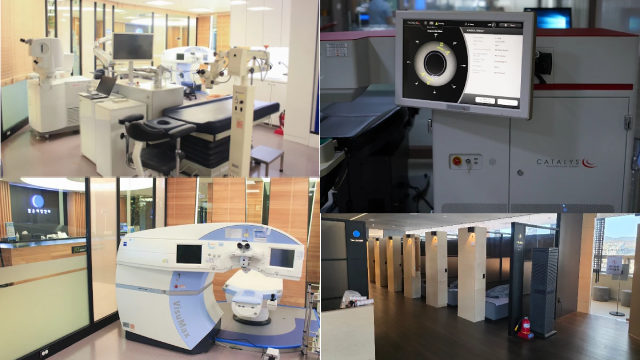
Accurate dry eye diagnosis requires specialist expertise, objective multi-test assessment, and the clinical depth to interpret findings across corneal, glandular, structural, and posterior segment domains simultaneously. Busan BGSS Eye Clinic in Seomyeon, Busanjin-gu provides all of these through a specialist team covering corneal disease, oculoplastics, and retinal conditions; a six-test protocol including the Galilei G4, OQAS, Pentacam, and OCT; and the BGSS iAquaCare trademarked dry eye program recognized as a global standard guideline. As the founding BGSS location since 1997 with 330,000+ procedures performed, the Seomyeon clinic's credentials are clear:
First ophthalmology clinic in Korea to receive JCI accreditation — four cycles
iAquaCare trademarked dry eye methodology — recognized as global standard guideline
Advanced Regenerative Medicine Institution (2026)
Six-test objective dry eye diagnostic protocol — OSDI, BUT, Galilei G4, OQAS, Pentacam, OCT at the Busanjin-gu, Busan facility
Key Medical Tourism Cooperative Institution, City of Busan — multilingual support in Chinese, English, Japanese, Mongolian, Russian, Vietnamese, and Indonesian
Patient Experiences: Dry Eye Diagnostic Testing at Busan BGSS Eye Clinic, Seomyeon
Patient Vignette 1 — Undiagnosed MGD, Late 40s
A patient in their late 40s at the Seomyeon, Busanjin-gu clinic had been using three different artificial tear brands for over a year with minimal improvement. The OSDI score confirmed moderate-to-severe dry eye. BUT testing showed reduced tear film stability, and Galilei G4 Meibomian gland assessment confirmed significant glandular dysfunction not identified in previous eye examinations elsewhere. Aqua IPL was recommended based on the MGD findings, and the patient was enrolled in the iAquaCare program. Subsequent OSDI and BUT testing documented progressive improvement. Results vary; no outcome is guaranteed.
Patient Vignette 2 — Pre-Surgery Dry Eye Assessment, Early 30s
A patient in their early 30s visiting the Busanjin-gu, Busan clinic for SMILE LASIK consultation underwent the six-test dry eye protocol as part of pre-operative assessment at the Seomyeon facility. OSDI scoring was mild, but OSI tear film analysis revealed borderline tear film instability, and Pentacam confirmed early epithelial irregularity from chronic subclinical dryness. The team recommended a course of iAquaCare and autologous serum prior to surgery to stabilize the ocular surface — and surgery proceeded safely after documented surface improvement. Individual findings vary and no outcome is guaranteed.
Find the Real Cause of Your Dry Eye — Book Your Diagnostic Assessment in Busan
If artificial tears are not resolving your dry eye, the problem is not the treatment — it is the diagnosis. The specialist dry eye team at Busan BGSS Eye Clinic in Seomyeon, Busanjin-gu will identify the specific subtype and severity of your dry eye through a six-test objective protocol, and recommend the targeted treatment your ocular surface actually needs. JCI accredited. Trademarked iAquaCare dry eye methodology. Advanced Regenerative Medicine Institution. Multilingual support in Chinese, English, Japanese, Mongolian, Russian, Vietnamese, and Indonesian.
**[Book Your Dry Eye Diagnostic Assessment at Busan BGSS Eye Clinic](/contact-us)
Other Services
Explore our comprehensive range of healthcare offerings tailored to your needs.
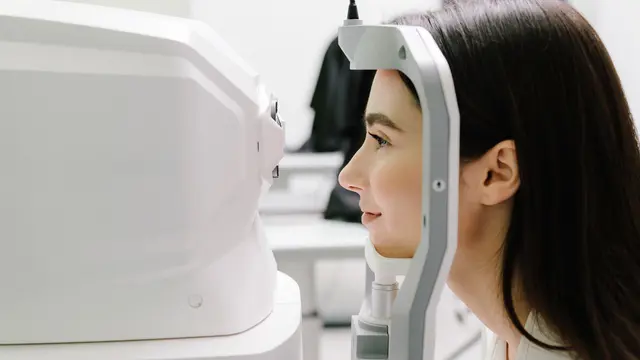
Dry Eye Diagnostic Testing
It is a spectrum of disorders with distinct underlying mechanisms — each requiring a different clinical response.
Learn More

Aqua IPL / Aqua Lifting
Dry eye syndrome is one of the most common and undertreated conditions in ophthalmology — affecting contact lens wearers, digital screen users, post-surgical patients, and adults over 40 with progressively declining tear film quality.
Learn More
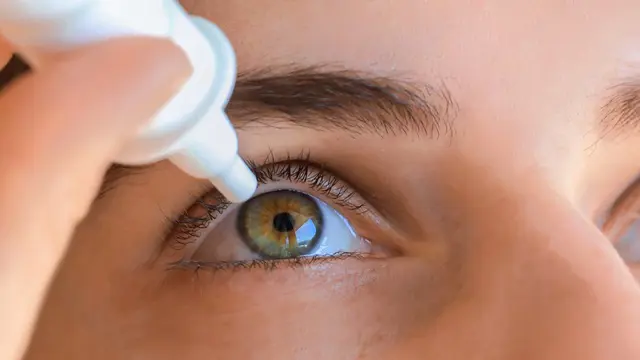
Autologous Serum Eye Drops
Autologous serum eye drops are a specialized therapeutic preparation in which a patient's own blood is processed to extract the serum — which is then formulated as personalized eye drops.
Learn More