Busan BGSS Eye Clinic · JCI-Accredited Ophthalmology Since 1997 · 7-Language Patient Care
JCI-Accredited · Since 1997
en-US


Cataract Surgery · Needs Clinic Confirmation
Comprehensive Eye Exam
A comprehensive eye examination is a structured, multi-component diagnostic assessment of the full eye — anterior segment, posterior segment, optic nerve, retina, and macula.
Schedule a ConsultationWhat Is a Comprehensive Eye Examination? Preventive Eye Health Screening in Busan

A comprehensive eye examination is a structured, multi-component diagnostic assessment of the full eye — anterior segment, posterior segment, optic nerve, retina, and macula — designed to detect high-risk ocular disease at its earliest, most treatable stage. Unlike a standard vision check that measures refractive error for glasses or contact lens prescription, a comprehensive eye examination at Busan BGSS Eye Clinic in Seomyeon, Busanjin-gu evaluates the structural health of every key ocular tissue using advanced precision equipment and multi-specialist clinical interpretation.
This type of examination is not included in Korea's national health screening program — it must be scheduled separately at a specialist ophthalmology clinic. This distinction matters clinically: the six high-risk eye diseases most likely to cause permanent vision loss — glaucoma, cataract, macular degeneration, keratoconus, retinal detachment, and diabetic retinopathy — frequently develop without noticeable symptoms in their early stages. By the time visual symptoms appear, significant and often irreversible damage may already have occurred. Comprehensive screening at the Busanjin-gu, Busan clinic allows our team to identify these conditions before they reach the symptomatic stage and implement staged tracking management to protect long-term vision.
The eyes change continuously — through growth, aging, systemic health complications, genetic factors, previous surgery, and ocular disease progression. At the Seomyeon, Busanjin-gu clinic, our team tailors each examination to the patient's age group, risk factors, family history, eye surgery history, and lifestyle — ensuring that the most clinically relevant conditions for each individual are the focus of their screening program at the Busan facility.
Who Needs a Comprehensive Eye Examination in Busan?
Every age group carries distinct ocular risk profiles, and the components of a comprehensive eye examination at Busan BGSS Eye Clinic in Seomyeon are selected accordingly. Our team recommends examination intervals and screening components based on each patient's individual risk category at the Busanjin-gu, Busan clinic.
Children, Teenagers, and Dream Lens Users (Under 20s): Young patients at the Seomyeon clinic are screened for amblyopia, color blindness and color weakness, strabismus, ptosis, eyelid entropion, corneal damage, keratoconus, retinopathy of prematurity, and congenital cataract. Teenagers using orthokeratology (Dream lens) require regular corneal monitoring to ensure safe ongoing use. Examinations are available from age 5 at the Busanjin-gu, Busan facility.
Adults in Their 20s and 30s (Vision Correction Candidates): This age group at the Seomyeon, Busanjin-gu clinic is most commonly presenting for refractive assessment and vision correction planning — but comprehensive screening also evaluates for Avellino corneal dystrophy (a genetic contraindication to LASIK), dry eye, floaters, retinal detachment risk, and trauma-related ocular changes. Identifying these conditions before any vision correction surgery is a patient safety essential at the Busan BGSS facility.
Adults in Their 40s and Above (Presbyopia, Cataract, and Blindness Risk): From the 40s onwards, the incidence of cataract, glaucoma, diabetic retinopathy, macular degeneration, central serous retinopathy, and other serious retinal diseases increases significantly. Our team at the Seomyeon clinic recommends regular comprehensive screening from this age group onwards — particularly for patients with diabetes, hypertension, a family history of glaucoma or macular degeneration, or a history of previous eye surgery at the Busanjin-gu, Busan facility.
International Patients Visiting Busan: For patients traveling to Busan from abroad, a comprehensive eye examination at the Seomyeon, Busanjin-gu clinic provides a complete ocular health baseline — identifying any conditions that may affect suitability for planned vision correction procedures and ensuring that any discovered diseases are diagnosed and treatment-planned before the patient returns home. Multilingual coordination is available throughout the examination process at the Busan BGSS facility.
Meet the Eye Examination Specialists at Busan BGSS Eye Clinic, Seomyeon
|
|
|
|
Dr. Gil-Ho Park, M.D., Ph.D. | Dr. Jeong-Min Woo, M.D. | Dr. Byung-Uk Ko, M.D. | Dr. Jong-Ho Park, M.D. |




Dr. Gil-Ho Park, M.D., Ph.D.
Director, Busan BGSS Eye Clinic | Visiting Professor, Sungkyunkwan University School of Medicine
Dr. Park's clinical scope spans cataract surgery, refractive surgery, and corneal and contact lens care. His dual membership in the American Academy of Ophthalmology and the American Society of Cataract and Refractive Surgery brings an internationally benchmarked standard to anterior segment screening and cataract assessment at the Seomyeon, Busanjin-gu clinic.
Dr. Jeong-Min Woo, M.D.
Director, Busan BGSS Eye Clinic | Visiting Professor, Dong-A University School of Medicine
Dr. Woo's expertise in cataract surgery, corneal disease, ocular adnexal conditions, and glaucoma-related care makes him a central figure in the multi-specialty screening program at the Busanjin-gu, Busan facility — particularly for patients whose examination reveals corneal irregularities, anterior segment disease, or early glaucoma indicators.
Dr. Byung-Uk Ko, M.D.
Director, Busan BGSS Eye Clinic | Visiting Professor, Dong-A University School of Medicine
Dr. Ko's published research on corneal health, wound healing, and periocular tissue assessment — combined with his oculoplastic expertise — supports the corneal topography, endothelial cell, and anterior segment components of comprehensive screening at the Seomyeon clinic. His 2013 commendation from Korea's Minister of Health and Welfare reflects a clinical career grounded in corneal science.
Dr. Jong-Ho Park, M.D., Master of Medicine
Director, Busan BGSS Eye Clinic | Associate Professor of Retina, Yangsan Pusan National University Hospital | Associate Professor of Pediatric Retina, Pusan National University Children's Hospital
Dr. Jong-Ho Park's retinal and vitreoretinal specialty — including macular hole surgery, neuro-ophthalmology, and pediatric retina care — anchors the retinal, macular, and optic nerve screening components of the comprehensive examination at the Busanjin-gu, Busan facility. Patients whose screening reveals retinal pathology, macular disease, or optic nerve abnormality are evaluated and managed by Dr. Jong-Ho Park directly within the Seomyeon clinic.
The four-specialist team at Busan BGSS Eye Clinic shares a consistent approach to comprehensive screening: every examination is interpreted in the context of the whole patient — age, family history, ocular history, systemic health, and lifestyle — not as isolated test results.
Comprehensive Eye Examination Programs at Busan BGSS Eye Clinic
BASIC Program — 10 Examination Components
The BASIC program at the Seomyeon, Busanjin-gu clinic covers the core anterior and posterior segment assessment for all age groups:
Corneal curvature measurement — refraction (myopia, hyperopia, astigmatism), corneal radius, refractive index, corneal astigmatism
Intraocular pressure measurement — IOP assessment for glaucoma risk prediction at the Busan facility
Manifest refraction test — refractive error measurement and dominant eye testing
Uncorrected visual acuity — baseline unaided vision measurement
Corrected visual acuity — best-corrected vision with glasses or lenses
Presbyopia addition power test — age-related near vision and presbyopia status assessment
Corneal topography — anterior and posterior corneal curvature mapping, irregular astigmatism detection, keratoconus screening, corneal thickness measurement at the Seomyeon clinic
Fundus photography — retinal center imaging covering optic nerve, macula, and screening for macular degeneration and drusen at the Busanjin-gu, Busan facility
Slit lamp microscopy — comprehensive anterior segment examination by an ophthalmologist
Exophthalmometer — eye protrusion measurement and thyroid-related eye disease screening
PREMIUM Program — BASIC Plus 5 Additional Components
The PREMIUM program at the Seomyeon, Busanjin-gu clinic adds five advanced diagnostic components for patients requiring deeper posterior segment and optic nerve evaluation:
Corneal endothelial cell examination — assessment of the innermost corneal cell layer for structural stability — critical for ICL and cataract surgery candidacy at the Busan BGSS facility
Optical coherence tomography (OCT) — CT-based imaging for optic nerve and retinal disease including macular degeneration, macular edema, macular hole, epiretinal membrane, diabetic retinopathy, central serous chorioretinopathy, and retinitis pigmentosa
Retinal nerve fiber layer imaging — CT imaging of optic nerve and retinal nerve fiber layer status for glaucoma staging and monitoring at the Seomyeon clinic
Detailed visual field testing — precise visual field measurement for glaucoma and field defect detection at the Busanjin-gu, Busan facility
Wide-angle fundus photography — expanded retinal imaging for optic nerve abnormality and peripheral retinal disease diagnosis
What to Expect During Your Comprehensive Eye Examination
A comprehensive eye examination at Busan BGSS Eye Clinic in Seomyeon, Busanjin-gu takes approximately two hours, with additional time if supplementary tests are required based on initial findings. All examinations are conducted by appointment under the advance reservation system at the Seomyeon clinic.
Before Your Examination at the Busan BGSS Facility:
Discontinue contact lens wear in advance: soft lenses 1 week; hard lenses 2 weeks; orthokeratology and special lenses 4 weeks or more
Bring any existing glasses including reading glasses to the Seomyeon, Busanjin-gu clinic
Arrange for a driver or plan to use public transport — dilation drops used during the examination cause blurred vision and light sensitivity for 6 or more hours, making self-driving unsafe after the appointment at the Busanjin-gu, Busan facility
Examinations are available from age 5 at the Seomyeon clinic
During Your Examination: Our team conducts each examination component systematically, with findings from each test informing subsequent steps. Where initial findings suggest a need for additional investigation, supplementary tests are added within the same visit at the Busan BGSS facility. All examination results are interpreted collaboratively by the relevant specialist directors at the Seomyeon, Busanjin-gu clinic.
After Your Examination: Results are reviewed with the patient and a personalized staged tracking management plan is established — including recommended follow-up intervals, risk factor monitoring, and referral to the relevant specialist clinic within the Busan BGSS team if any condition requires treatment. For patients with discovered conditions, one-stop treatment is available within the Seomyeon, Busanjin-gu clinic without the need for external referral.
Conditions Detected and Managed Through Comprehensive Eye Screening
Glaucoma: Glaucoma is among the leading causes of irreversible blindness globally and is frequently asymptomatic until advanced stages. IOP measurement, detailed visual field testing, retinal nerve fiber layer imaging, and wide-angle fundus photography at the Seomyeon clinic allow our team to identify glaucoma and ocular hypertension at stages where intervention can prevent vision loss at the Busanjin-gu, Busan facility.
Cataract and Age-Related Lens Changes: Slit lamp examination and OCT at the Busan BGSS clinic detect early lens opacity and cataract development before significant visual impairment occurs — allowing our team to plan surgical timing and IOL selection at the optimal intervention point for each patient at the Seomyeon facility.
Macular Degeneration and Retinal Disease: OCT, fundus photography, and wide-angle retinal imaging at the Busanjin-gu, Busan clinic identify macular degeneration, diabetic retinopathy, central serous retinopathy, and other retinal conditions at their earliest detectable stages. Early diagnosis significantly expands treatment options and preserves more functional vision at the Seomyeon, Busanjin-gu clinic.
Keratoconus and Corneal Disease: Corneal topography at the Busan BGSS facility identifies keratoconus, irregular astigmatism, and Avellino corneal dystrophy — conditions that are contraindications to LASIK and SMILE surgery and require specialist corneal management. Early detection at the Seomyeon clinic prevents both vision deterioration and inadvertent vision correction surgery in unsuitable candidates.
Diabetic Retinopathy: For patients with diabetes, regular retinal examination at the Busanjin-gu, Busan clinic is essential — diabetic retinopathy is the leading cause of blindness in working-age adults and develops silently until advanced stages. Our retinal specialist director provides dedicated diabetic retinopathy monitoring and management at the Seomyeon facility.
Why Choose Busan BGSS Eye Clinic in Seomyeon for Comprehensive Eye Examination?
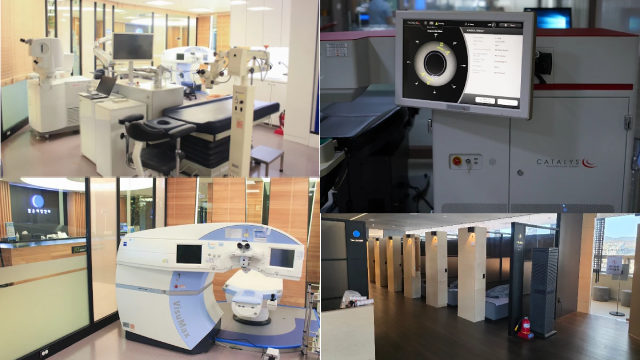
A comprehensive eye examination is only as useful as the clinical team interpreting its results and the treatment infrastructure available when conditions are found. Busan BGSS Eye Clinic in Seomyeon, Busanjin-gu offers both — a five-director multi-specialist team covering every major ophthalmology subspecialty, and the full diagnostic and surgical platform to move from screening to treatment without external referral. As the founding BGSS location since 1997 with 330,000+ vision procedures and 628,000+ clinical cases across the network, the Seomyeon clinic's screening program benefits from decades of accumulated clinical pattern recognition and a data-informed approach to early disease detection. The clinic's credentials reinforce this:
First ophthalmology clinic in Korea to receive JCI accreditation — four cycles
Advanced Regenerative Medicine Institution (2026) and Asia-Pacific EVO ICL Training Center (2026)
Five-director multi-specialist team — cataract, corneal disease, glaucoma, retina, and oculoplastics all covered internally at the Seomyeon, Busanjin-gu clinic
One-stop treatment — discovered conditions treated within the Busan BGSS facility without external referral
Key Medical Tourism Cooperative Institution, City of Busan — multilingual support in Chinese, English, Japanese, Mongolian, Russian, Vietnamese, and Indonesian
Patient Experiences: Comprehensive Eye Examination at Busan BGSS Eye Clinic, Seomyeon
Patient Vignette 1 — Early Glaucoma Detection, Mid 40s
A patient in their mid-40s visiting Busan BGSS Eye Clinic for a routine comprehensive examination had no visual symptoms and no prior glaucoma diagnosis. IOP measurement and retinal nerve fiber layer imaging at the Seomyeon, Busanjin-gu clinic identified elevated pressure and early nerve fiber thinning consistent with early glaucoma. A staged monitoring and treatment plan was established by our glaucoma specialist director, and the patient began management before any measurable visual field loss had occurred. Results of individual examinations vary; findings depend on each patient's ocular health status.
Patient Vignette 2 — Pre-LASIK Avellino Screening, Late 20s
A patient in their late 20s at the Busanjin-gu, Busan clinic had planned LASIK surgery and presented for comprehensive pre-operative screening. Corneal topography and slit lamp examination at the Seomyeon facility identified findings consistent with Avellino corneal dystrophy risk — a genetic contraindication to corneal laser surgery. The patient was counseled on ICL as a safe alternative and proceeded with a modified correction plan. This outcome illustrates the clinical value of comprehensive screening before any vision correction procedure at the Busan BGSS clinic.
Protect Your Vision for Life — Book Your Comprehensive Eye Examination in Busan
Your eyes change every day — and many of the conditions most likely to permanently affect your vision develop without symptoms until significant damage has already occurred. A comprehensive eye examination at Busan BGSS Eye Clinic in Seomyeon, Busanjin-gu gives our team the diagnostic depth to find what standard vision checks miss, identify high-risk conditions at their earliest treatable stage, and establish a personalized tracking management plan for your long-term ocular health. With JCI accreditation, a five-director multi-specialist team, advanced precision diagnostic equipment, and one-stop treatment capability, the Seomyeon clinic offers the most complete eye health screening available in Busan. International patients are fully supported in Chinese, English, Japanese, Mongolian, Russian, Vietnamese, and Indonesian.
**[Book Your Comprehensive Eye Examination at Busan BGSS Eye Clinic](/contact-us)
Other Services
Explore our comprehensive range of healthcare offerings tailored to your needs.
Dry Eye Diagnostic Testing
It is a spectrum of disorders with distinct underlying mechanisms — each requiring a different clinical response.
Learn More

Aqua IPL / Aqua Lifting
Dry eye syndrome is one of the most common and undertreated conditions in ophthalmology — affecting contact lens wearers, digital screen users, post-surgical patients, and adults over 40 with progressively declining tear film quality.
Learn More
Autologous Serum Eye Drops
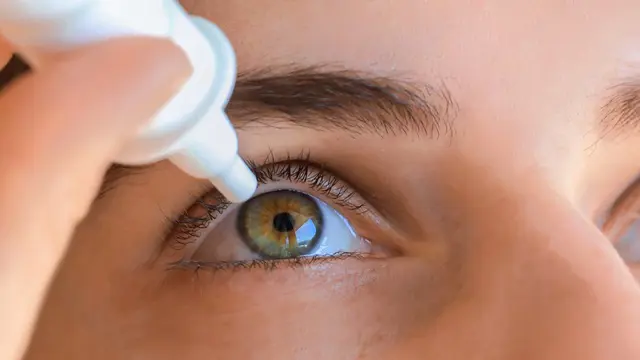
Autologous serum eye drops are a specialized therapeutic preparation in which a patient's own blood is processed to extract the serum — which is then formulated as personalized eye drops.
Learn More